

Have you ever seen photos of bright coral reefs turning ghost-white and wondered what actually causes coral bleaching?
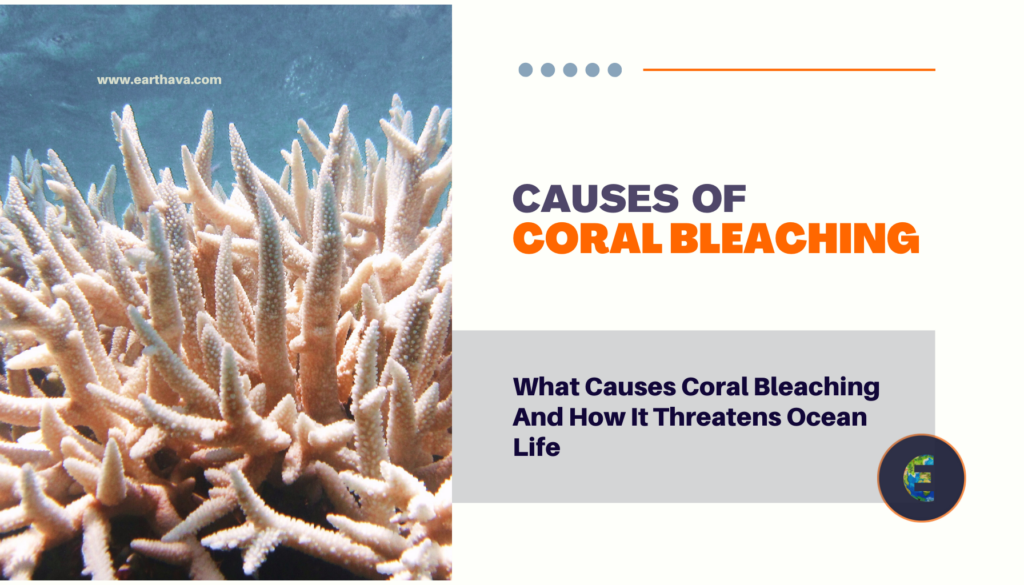
Coral bleaching happens when corals lose the tiny algae (zooxanthellae) that live inside their tissues and help feed them.
In the U.S., this is not just a faraway reef problem. NOAA’s Ocean Service notes that in 2005, a massive bleaching event in the Caribbean led the U.S. to lose about half of its coral reefs there in a single year. 1
Scientists watch heat, water quality, and reef health using satellites, underwater surveys, and reef restoration tools because heat, pollution from farms and sewage, plastics, oil, and some sunscreen chemicals can all damage corals. 2
Heavy rain can lower salinity, and extremely low tides can stress corals, too. Cold snaps can hurt them as well, and a January 2010 cold event in the Florida Keys with a 6.7°C drop showed how quickly corals can be damaged. 3
I’ll walk you through the main causes, what coral bleaching does to marine life, how recovery works, and what you can do that actually helps.
Key Takeaways
- A 1°C sea surface rise for four weeks can trigger bleaching, and eight weeks or more can cause coral death; 1.5°C warming threatens reef survival.
- The 2005 U.S. Caribbean thermal stress killed about half the region’s reefs, and a 6.7°C cold shock in January 2010 damaged Florida Keys corals.
- Pollution, nutrient runoff, sediment, microplastics, and sunscreen chemicals increase disease and bleaching, while crown-of-thorns starfish outbreaks worsen reef decline.
- To protect reefs, reduce emissions, expand marine protected areas, fund restoration, use renewable energy, and control crown-of-thorns populations.
What is coral bleaching?
Coral bleaching happens when corals expel microscopic algae called zooxanthellae after stress from warmer ocean temperatures, bright light, or poor water quality.
These algae give corals their color and supply most of the coral’s energy through photosynthesis, so losing them is like cutting off the coral’s main food source.
Bleached corals look white. They are not dead yet, but they face coral starvation, disease, and higher coral mortality if the stress continues. 1
Lose the algae, lose the color, and the reef loses its lifeline.
A sea surface rise of just 1°C, sustained for four weeks, can trigger bleaching. If heat stress lasts eight weeks or more, corals begin to die.
Cold shocks can kill, too. In January 2010, a 6.7°C drop in the Florida Keys caused cold-water bleaching and coral losses.
Mass bleaching events hit the Great Barrier Reef and other reef ecosystems, lowering marine biodiversity, stressing coral colonies, and harming coastal communities that rely on reef restoration and healthy reefs for fish and tourism.1
Quick tip if you snorkel or dive: if you see freshly bleached coral (bright white, with the structure still intact), keep your fins up, avoid contact, and do not stand on reef flats, especially during very low tide.
Main causes of coral bleaching
Coral bleaching is caused by stress, and heat is the biggest driver. Rising water temperatures and longer marine heatwaves can push corals past their limits.
Then local stressors pile on: polluted runoff, sediment, extreme sunlight exposure in shallow water, low tides that expose corals to air, ocean acidification, and outbreaks like crown-of-thorns starfish.
If you want a practical way to think about risk, ask two questions: (1) Is the water staying unusually hot for weeks, and (2) is the water quality getting worse at the same time? When the answer is yes to both, bleaching events get more likely and more severe.
How do rising ocean temperatures cause coral bleaching?
Heat stress disrupts the symbiotic relationship between coral polyps and their microscopic algae. The coral expels the algae, the coral turns pale or white, and that is coral bleaching.
To track this in a way you can actually use, NOAA’s Coral Reef Watch uses a metric called Degree Heating Weeks (DHW), which adds up how long and how far temperatures stay above the usual warm-season peak: around 4 DHW signals bleaching is expected, and 8 DHW means significant bleaching is expected and mortality is likely.
That timeline matches what we see in real bleaching events. In the U.S. Virgin Islands during 2005, NOAA scientists documented bleaching across more than 90% of coral cover, followed by a steep decline in hard coral cover on monitored reefs. 1
Once corals bleach, they have less energy to fight off disease, heal damage, and reproduce. That is why repeated marine heat waves are so brutal: they keep resetting the reef before it can rebuild.
- If you manage a shoreline property or local business, follow local bleaching alerts and encourage gentle boating and anchoring practices during heat stress, because broken corals recover more slowly when they are already energy-starved.
- If you travel to reefs, pick operators that use mooring buoys (instead of anchoring on the reef) and brief guests on no-touch practices.
- If you fish: support rules that protect herbivorous fish, since grazers help keep algae from smothering bleached coral as it tries to recover.
Scientific consensus says coral reefs will struggle to survive if global warming pushes temperatures to 1.5°C, so reducing emissions, using renewable energy, and protecting reefs in marine protected areas can help reef restoration and reef resilience.
How do pollution and runoff contribute to coral bleaching?
Heat may trigger bleaching, but dirty water often decides how bad it gets. Nutrient runoff from farms, lawns, and sewage can fuel algal blooms, cut the light corals need, and push reefs toward disease.
Fine sediment from land clearing and construction can bury coral tissue and reduce photosynthesis. Microplastics and other debris can scrape coral and block sunlight, which matters more than people realize when the coral is already stressed. 2
- Cut nutrients at the source: use fertilizer sparingly and never right before heavy rain, because storm runoff can flush nutrients straight to the coast.
- Handle wastewater seriously: failing septic systems and sewer overflows add nutrients and pathogens that can worsen coral disease after a bleaching event.
- Keep sunscreen from becoming reef pollution: the EPA notes that some chemicals (including oxybenzone) are suspected of affecting coral health, and places like Hawaii (starting January 1, 2021) and the U.S. Virgin Islands (with a ban that took effect March 30, 2020) restricted sales of certain sunscreen ingredients tied to reef harm.
These stressors add to thermal stress from marine heatwaves and climate change, pushing corals toward mass bleaching events and coral mortality. 1
How do changes in salinity and low tides affect coral bleaching?
Corals like stability. Big salinity swings and air exposure can knock them off balance fast, especially in shallow reef flats.
During extreme low tides, shallow corals can sit high enough that parts of the colony are exposed to air and intense sunlight, which can trigger coral bleaching. 3
After heavy rain, freshwater can pool and flow over nearshore reefs, changing salinity quickly. That sudden change stresses coral polyps and can set the stage for worse bleaching once the heat returns.
- Plan around the tide: if you are snorkeling in very shallow reef areas, go at mid-to-high tide so you are less likely to kick, stand on, or expose reef flats.
- After big storms, give nearshore reefs a break, since storm runoff often carries sediment and pollution at the same time, and salinity is swinging.
- Support local stormwater upgrades: simple fixes like better drainage and erosion control reduce the sediment and nutrient pulse that often follows heavy rain.
How coral bleaching threatens ocean life
Coral bleaching is not just a color change. It can turn a complex reef city into a sparse landscape, and that shift hits fish, invertebrates, and coastal communities in a chain reaction.
When reefs lose living coral, they lose hiding places, nursery habitat, and the complex surfaces that support food webs. That is why bleaching events often show up later as drops in fish abundance and smaller catches.
It also weakens natural coastal protection. Healthy reefs break wave energy, so when coral structure erodes, shorelines can take a bigger beating during storms.
What impact does coral bleaching have on marine ecosystems?
Coral bleaching breaks the symbiotic relationship between coral polyps and microscopic algae. 4
When bleaching lasts long enough, corals can starve, get sick, and die, and reef structure starts to degrade. That is when you see bigger changes, like fewer grazing fish, more algae, and slower recovery after storms.
In NOAA’s Mission: Iconic Reefs plan for the Florida Keys, the agency describes reefs as both an ecological cornerstone and a major economic engine, with about 5 million visitors a year contributing roughly $2.4 billion in annual sales tied to reef-related recreation.
Mass bleaching events also make it easier for other stressors to take over. Crown-of-thorns starfish outbreaks and coral diseases can surge after heat stress, and recovery becomes harder.
Maintaining genetic diversity and networks of protected reefs, including marine protected areas, helps reef resilience. Scientists pair reef restoration with community action on emissions reduction to address the root cause of warming.
How does coral bleaching lead to loss of biodiversity?
Reefs support a huge share of marine biodiversity, even though they cover a small area. When coral dies, the habitat disappears for species that cannot easily move or adapt.
Bleaching also disrupts feeding and breeding. Fish that depend on branching corals lose shelter, while predators lose hunting grounds, and the whole food web can thin out fast. 1
- Short-term: fewer hiding spots, more predation, and less food on the reef.
- Mid-term: fewer juvenile fish survive to adulthood, so local fisheries can drop.
- Long-term: repeated mass coral bleaching events leave too little time for recovery, so reefs can shift to algae-dominated ecosystems.
This is why the recent global pattern matters. In the latest updates shared publicly in 2025 by international reef monitoring groups working with NOAA, heat stress tied to the ongoing global bleaching crisis has affected a very large share of the world’s reef areas since 2023. 4
Can corals recover from bleaching?
Yes, many corals can recover from a bleaching event if the stress ends soon enough, meaning temperatures drop back toward normal and water quality stays good.
Species matter. Massive, boulder-like corals (including Porites) often tolerate stress longer than fast-growing branching corals like Acropora, which can bleach and die more quickly. 5
| What you’re seeing | What it often means | What helps most |
|---|---|---|
| Algae grows over the bare skeleton | Early bleaching, the coral may rebound | Reduce local stress: avoid contact, reduce pollution, protect grazers |
| Coral is bright white for weeks | High energy loss, disease risk rises | Limit additional damage (anchoring, touching, sediment), support restoration |
| Long-term recovery needs restoration, plus less heat stress | Coral death, structural habitat starts eroding | Long-term recovery needs restoration plus less heat stress |
In the Florida Keys, NOAA’s Mission: Iconic Reefs program lays out what modern recovery looks like at scale: restore multiple reef sites over years, outplant large numbers of corals grown in nurseries, and aim to rebuild coral cover enough that the reef can start repairing itself. 5
Scientists also call for regular, standardized assessments to track coral polyps, coral mortality, and coral recovery across sites such as the Great Barrier Reef and Ningaloo Reef. 5
Active actions, like reef restoration, marine protected areas, emissions reduction, and tackling crown-of-thorns starfish outbreaks, raise the odds of reef recovery.
Conclusion
Coral bleaching starts with heat stress, poor water quality, and changing salinity. Zooxanthellae leave, and coral polyps become weak and pale.
Mass bleaching on the Great Barrier Reef and Ningaloo Reef harms marine life and coastal communities.
Corals can recover if temperatures ease and local pollution drops. Cutting emissions, funding reef restoration, and expanding marine protected areas give reefs a better shot at protecting marine biodiversity for the long haul.
FAQs
Coral bleaching happens when ocean temperatures rise, due to global warming and climate change, and corals get heat stress, like a fever for the reef. Warmer water, marine heatwaves, and thermal stress push coral polyps to expel the microscopic algae that feed them.
When corals bleach, they lose their main food, and corals can face coral starvation and coral death. That raises coral mortality, trims marine biodiversity, and removes homes for reef fish and other marine animals, which hits food security for coastal communities.
Yes, mass bleaching events are more frequent, as oceans and climate change drive up ocean temperature. Repeated marine heat waves and other effects of climate change make bleaching events worse.
Some hard corals can recover if water temperatures fall and water quality improves, but recovery often takes years. Reef restoration, coral restoration, and marine protected areas can help, but coral resilience varies, and coral disease or crown-of-thorns starfish outbreaks can prevent recovery.
Burning oil and gas, and failing to cut emissions, push global warming and higher ocean temperatures. We need emissions reduction, renewable energy, and a push toward net zero to slow the impacts of climate change. Local steps like improving water quality, cutting runoff, and protecting marine ecosystems also lower coral stress.
Bleaching hits big places like the Great Barrier Reef and Ningaloo Reef, and it harms coral reef ecosystems worldwide. Events spike with low tides, high sunlight exposure, and climate swings like El Niño and La Niña, which change water temperatures.
Emerging Trends in Reef Restoration and Local Case Studies
Recent research shows that coral bleaching is caused by stress from rising ocean temperatures due to climate change. Even a 1°C to 2°C rise above normal stresses coral polyps and disrupts the symbiotic relationship with microscopic algae. New reef restoration projects use renewable energy and emissions reduction to support recovery efforts. Local case studies display progress in marine biodiversity restoration through outplanting nursery-grown corals and managing crown-of-thorns starfish populations.
Current trends include monitoring marine heatwaves and thermal stress using interactive infographics that detail the Degree Heating Weeks (DHW) metric. Projects on the Great Barrier Reef and Ningaloo Reef combine reef restoration with community efforts. Coastal communities use regular assessments to reduce coral mortality and manage coral diseases. Interactive graphics on this page help show ocean temperature trends and coral recovery timelines.
- Warm Waters: Even a 1-2°C temperature rise stresses corals and disrupts the algae’s food production.
- Contributing Factors: Pollution, nutrient runoff, low tides, and ocean acidification add to coral stress.
- Bleaching Effects: Losing zooxanthellae leaves corals vulnerable to disease and coral death.
- Recovery: When ocean temperatures drop and water quality improves, corals can regain their algae and recover.
These trends lead to innovative approaches in reef restoration that support marine life and coastal communities. Local initiatives use modern restoration techniques while addressing issues caused by climate change.
Disclaimer: This content is for informational purposes only and does not constitute professional advice. It is not sponsored by any third party.
Methodology: Data come from NOAA, international reef-monitoring groups, and peer-reviewed studies. Research methods include satellite observations, underwater surveys, and standardized assessments.
- https://www.nationalgeographic.com/environment/article/coral-bleaching-causes-impacts
- https://coral.org/en/blog/how-pollution-threatens-coral-reefs-and-what-we-can-do-about-it/ (2025-05-13)
- https://oceanservice.noaa.gov/facts/coral_bleach.html (2024-06-16)
- https://pmc.ncbi.nlm.nih.gov/articles/PMC9545801/
- https://www.sciencedirect.com/science/article/abs/pii/S0272771424005018
 Earthava is an environmental collective designed to turn awareness into impact. From deep dives into ecology to daily sustainable swaps, we provide the tools and intel you need to protect the ground you stand on.