

Have you ever looked at a clear glass of water and wondered what you can’t see in it, especially with plastic pollution in the news all the time?
Microplastics are tiny, man-made plastic pieces or fibers smaller than 5 millimeters, some as small as 1 nanometer, and you can find them in oceans, freshwater, air, tap and bottled water, sea salt, and food. 2
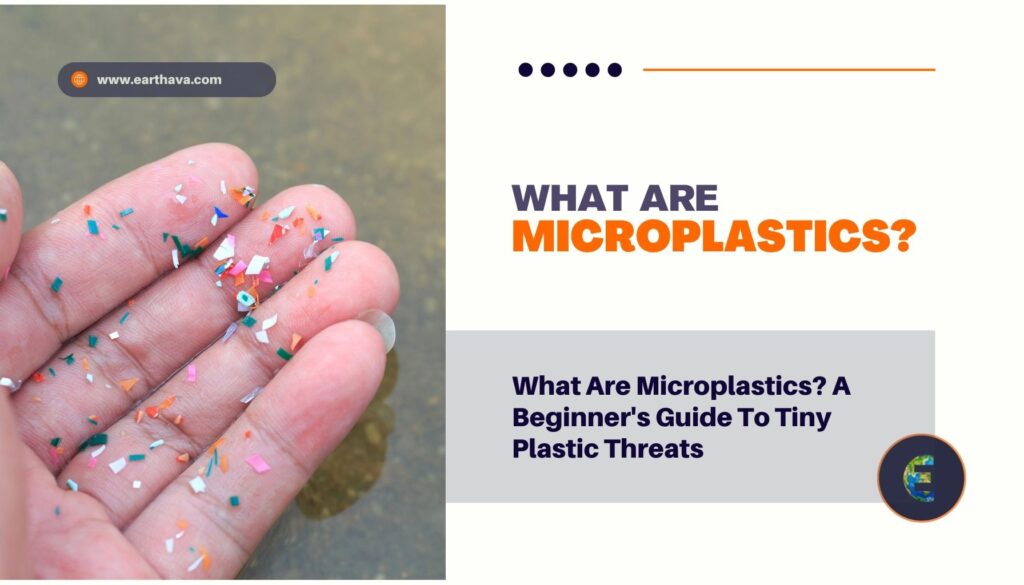
They can start small, such as microbeads in cosmetics or nurdles used for manufacturing, or they form when larger plastics (bottles, bags, and packaging) break down into smaller pieces.
This guide will walk you through what micro and nanoplastics are, where they come from, where they end up, and what that can mean for wildlife and people.
You’ll also get practical, at-home steps that cut exposure and reduce what you send down the drain.
Key Takeaways
- Microplastics are plastic particles from about 1 nanometer to 5 millimeters, released by synthetic clothing, tire wear, fragmenting packaging, and microbeads.
- Scientists use Raman, FTIR, mass spectrometry, and microscopy to detect microplastics found in tap and bottled water, sea salt, air, soil, and human tissues.
- Studies report 15–51 trillion ocean pieces (2014), 93% of 11 bottled water brands had microplastics averaging 325 particles per liter, and 2024 found 240,000 nanoplastics per liter.
- Microplastics carry persistent organic pollutants, bioaccumulate, appear in human blood and placenta, link to inflammation and arterial plaque, and policies include the 2015 Microbead-Free Waters Act and filtration upgrades.
What Are Microplastics?
Microplastics are tiny plastic particles, usually under 5 millimeters, that come from sources like polyethylene terephthalate (PET) fibers, tire wear, and fragmentation of single‑use plastics.
If you want a U.S. benchmark, EPA researchers define microplastics as plastic particles ranging in size from 5 mm (about the size of a pencil eraser) down to 1 nanometer. That size range helps explain why they show up in so many places, and why filtering them out is tricky.
Scientists detect them with Raman spectroscopy and Fourier transform infrared spectroscopy, and they track how these plastic particles move through water, soil, and the food web.
What defines microplastics and their main features?
Plastic particles or fibers smaller than 5 millimeters, often described as roughly 1 micrometer to 5 mm, count as microplastics, and some fragments can be as tiny as 1 nanometer. 1
They matter because size controls behavior. Bigger pieces settle into sand and sediment, while smaller pieces stay suspended longer, travel farther, and slip through more filtration steps.
A 2014 ocean survey that combined sampling and modeling estimated at least 5.25 trillion plastic particles afloat on the ocean surface, weighing about 269,000 metric tons. That number matters for you because it shows how much “raw material” exists to keep fragmenting into smaller plastic particles over time. 1
Raman spectroscopy and FTIR can help identify polymers (for example, polyethylene terephthalate and high-density polyethylene) and can also reveal additives or pollutants that hitch a ride on these particles, including persistent organic pollutants.
- Primary microplastics start small (microbeads, pellets, some industrial abrasives).
- Secondary microplastics form when larger plastic waste breaks down through sunlight, abrasion, and heat.
- Wastewater treatment plants trap a lot of particles, but not all, so some microplastics still move downstream into rivers, lakes, and coastal waters.
What sizes and types of microplastic particles exist?
Tiny bits range from near invisible to about the size of a grain of sand.
Microplastic sizes run from 1 nanometer to 5 millimeters, so they can slip through filters and mix into drinking water contamination. 2
In U.S. research language, nanoplastics are often treated as a subset of microplastics, typically described as smaller than 1 micrometer (1,000 nanometers). That “nano” size is one reason scientists pay so much attention to bottled water, indoor air, and fine dust.
Shape also matters. Beads, fragments, pellets, film, foam, and fibers behave differently in water and air, and they show up differently under microscopes and spectroscopy.
| Type | What it looks like | Common sources | Why you should care |
|---|---|---|---|
| Fibers | Hair-like strands | synthetic clothing, textiles, some carpets | They’re common in laundry and indoor dust, and they can pass through treatment steps. |
| Fragments | Jagged chips | synthetic clothing, textiles, and some carpets | They keep breaking into smaller pieces, increasing the count of plastic particles. |
| Pellets (nurdles) | plastic degradation of single-use plastics, packaging, and marine debris | plastic polymers used in manufacturing | Spills can contaminate shorelines and become long-lasting plastic debris. |
| Nanoparticles | Too small to see without advanced tools | Small, round or lentil-like bits | They can pass more filters and are harder to measure consistently. |
Types of Microplastics
Types of microplastics are split into tiny beads and fibers, and into fragments from broken plastic polymers like bottles and bags.
One helpful way to think about this is “made small” versus “broken small.” That difference points you to the best prevention step.
What are primary microplastics?
Primary microplastics are purposely made, tiny plastic particles 5 mm or smaller.
They include microbeads that used to be common in some rinse-off personal care products, as well as glitter, some seed coatings, and raw plastic pellets (often called nurdles) that measure about 2 to 5 mm.
Manufacturers use polymers like polyethylene, polypropylene, PET, and nylon, and many microplastic ingredients can show up on cosmetic labels. 3
In the U.S., the Microbead-Free Waters Act of 2015 set phased deadlines to stop manufacturing rinse-off cosmetics with plastic microbeads by July 1, 2017, and to stop selling them into interstate commerce by July 1, 2018 (with a later timeline for certain over-the-counter drug products that are also cosmetics). That matters because it’s one of the clearest examples of a product-based rule that cuts microplastics at the source.
- Action for your bathroom shelf: If a product is rinse-off, check the ingredient list for plastic polymers like polyethylene or polypropylene before you buy.
- Action for crafts and kids’ products: If you use glitter or “sparkle” cosmetics, treat cleanup like fine dust, wipe with a damp cloth, and throw it away; don’t rinse it down the sink.
What are secondary microplastics?
Secondary microplastics form when larger plastic items break down under the sun, heat, wind, waves, or regular use. 2
Packaging and single-use plastics are obvious sources, but in day-to-day life, abrasion sources can be even more constant: driving (tire wear) and washing (synthetic textiles).
A major global assessment from 2017 estimated that, for primary microplastics reaching the ocean, laundry of synthetic textiles and abrasion of tires together made up about 63.1% of releases (34.8% from textiles and 28.3% from tires). That points to a practical takeaway: small routine activities can generate a lot of microplastics even if you never litter. 2
Small bits, big trouble.
- Action for laundry: Reduce shedding at the source by washing synthetics less often and avoiding “extra aggressive” cycles when you don’t need them.
- Action for driving: Tire wear rises with heavier vehicles and aggressive driving, so smoother acceleration and correct tire pressure can help cut plastic particles from roadways.
What are nanoplastics?
Nanoplastics are plastic particles smaller than 1,000 nanometers, invisible to the naked eye.
A 2024 U.S. analysis of bottled water using advanced imaging reported about 240,000 detectable plastic particles per liter on average, and about 90% were nanoplastics. 4
That number changes how you shop because it suggests that “clear” does not mean “particle-free,” and the smallest particles are the hardest to remove once they’re in water.
- Action you can take today: If you drink bottled water out of habit, switching even part-time to filtered tap water can cut both plastic waste and potential microplastics exposure.
- Action for families: Heat speeds up plastic leaching, so avoid storing hot liquids in plastic bottles, and don’t leave bottled water in a hot car.
Scanning electron microscope imaging and mass spectrometry help spot and analyze these tiny plastic polymers and plastic additives in the environment and in tissues. These micro and nanoplastics can move through the bloodstream in lab and observational research, and they are being studied for inhalation of microplastics and long-term ecological and human health risks.
Sources of Microplastics
Microplastics come from many places, like synthetic clothing fibers, tire wear, packaging, cosmetics, and fishing gear, and they wash into waterways, soils, and the air.
In the U.S., stormwater and wastewater are major “transport systems” for tiny plastic particles, moving them off roads, out of homes, and into rivers and coastal waters.
How do synthetic clothing and textiles contribute to microplastics?
Synthetic clothing sheds vast amounts of microplastic fibers during washing and drying.
One peer-reviewed washing study estimated that a single 6 kg load of acrylic fabric could release over 700,000 fibers in one wash. That number matters because wastewater treatment can remove a lot of particles, yet the volumes are so large that “a small percentage left behind” can still mean a lot of plastic particles leaving the plant. 5
Indoor air and household dust can also carry fibers, so you’re dealing with both ingestion and inhalation pathways in everyday life.
- Action for laundry day: Prioritize full loads (less friction per garment) and wash synthetics only when needed, especially fleece and athletic wear.
- Action for indoor dust: Wet-dust hard surfaces and use a vacuum with a high-efficiency filter to reduce airborne microplastics and dust contamination.
What role do packaging and containers play in microplastic pollution?
Packaging drives plastic waste, and in the U.S., it’s the biggest source category of plastics in municipal solid waste tonnage, including bags, sacks, wraps, PET bottles, and high-density polyethylene bottles. 6
Packaging also matters for personal exposure, since friction, heat, and time can increase the plastic particles and plastic additives that migrate into food and beverages.
- Action for drinks: If you use single-use plastic bottles, keep them cool, don’t reuse them for hot liquids, and avoid leaving them in direct sunlight.
- Action for food: Move leftovers into glass or stainless containers before reheating, since heat can accelerate plastic leaching.
Babies face high exposure from feeding gear. A 2020 study estimated potential exposure from polypropylene infant feeding bottles ranging from 14,600 to 4,550,000 particles per capita per day, depending on the region, and found that release rises sharply with hotter water during formula preparation. 6
How do cosmetics and personal care products release microplastics?
Cosmetic formulas can include plastic ingredients used as texturizers, film-formers, and exfoliators, including polyethylene, polypropylene, PET, and nylon.
Personal care products like shampoos, facial scrubs, and makeup can shed these bits during use and washing.
In the U.S., rinse-off microbeads fell under the Microbead-Free Waters Act of 2015, with deadlines that phased out manufacturing and sale of affected rinse-off products on a set timeline. 7
- Action for shopping: For rinse-off products, treat any “plastic grit” as a red flag, and choose exfoliants based on salt, sugar, oatmeal, or other non-plastic abrasives.
- Action for cleanup: If you use glitter makeup, wipe it off with a disposable towel first, then wash. This keeps more microplastics out of household sewage.
Scientists test products with filters, spectroscopy, and microscopy to detect polyethylene and other plastic polymers. 8
How does fishing gear and marine equipment add to microplastic waste?
Abandoned, lost, or discarded fishing gear (often shortened to ALDFG) breaks into tiny fragments as rope, nets, and lines age, adding plastic debris to the marine environment.
Those fragments matter because they can be mistaken for food, and they can also physically entangle prey and predators before they even become microplastic pollution.
- Action for boaters and anglers: Treat line and net scraps like hazardous waste, bag them, and bring them back for proper disposal.
- Action for communities: Support gear take-back and shoreline cleanup programs that target marine debris before it degrades into micro and nanoplastics.
How does tire wear produce microplastics?
Tire rubber sheds tiny bits as tires roll, brakes grab, and tires hit rough pavement.
In a 2017 global estimate focused on primary microplastics reaching the ocean, tire abrasion accounted for about 28.3% of releases, and road runoff was identified as the biggest pathway (66%). That pairing matters because it points to two high-leverage fixes: reduce tire wear and capture stormwater. 2
- Action for drivers: Keep tires properly inflated and avoid hard acceleration and braking when you can.
- Action for neighborhoods: Storm drain screens, street sweeping, and green infrastructure (like bioswales) can help intercept tire wear particles before they reach waterways.
What microplastics come from construction and renovation materials?
Construction and renovation can release plastic particles from paints, coatings, sealants, synthetic flooring, insulation, and plastic piping.
These sources matter because they often generate dust that becomes airborne microplastics indoors, and because stormwater can carry particles from outdoor work sites into gutters and drains.
- Action for contractors and DIY projects: Use dust containment (plastic sheeting, sealed doorways, and wet sanding when appropriate) and capture paint chips and sanding residue for disposal.
- Action for cleanup: Vacuum fine dust with a high-efficiency filter and damp-wipe surfaces instead of dry sweeping.
How do industrial processes and manufacturing generate microplastics?
Resin pellets (nurdles) can spill during transport and processing.
Manufacturers also grind, cut, and polish plastic polymers, which can generate tiny fragments that add to microplastics pollution if containment fails. 10
In U.S. wastewater effluent monitoring across multiple facilities, researchers have measured microplastic pollution leaving treatment plants, showing that even low concentrations per liter can add up to daily discharges in the millions of particles due to the huge volume treated. That’s why pellet containment and filtration controls at the source can be so effective.
- Action for facilities: Use pellet containment practices (sealed handling, spill response, and drain protection) and verify filters and screens are maintained.
- Action for local buyers: When you choose suppliers, ask if they have documented pellet-loss prevention practices.
How do transportation and roadways contribute to microplastic pollution?
Cars and trucks generate microplastics through tire wear, brake wear, and road abrasion, and those particles mix with street dust.
Road runoff and highway spray can move fragments into sediments, wetlands, and drinking water sources, especially during heavy rain.
- Action for cities: Prioritize catch-basin cleaning and street sweeping before the rainy season.
- Action for households: If you live near a busy road, reduce indoor dust buildup with doormats, shoe removal, and frequent damp cleaning.
Where Microplastics Are Found
Microplastics show up in marine and freshwater ecosystems, in soil, and in household dust, and they enter the air we breathe.
You can also find them in seafood, salt, and drinking water, which is why this issue connects directly to both the environment and everyday routines.
Where are microplastics found in oceans and freshwater ecosystems?
Scientists find microplastics from tropical waters to polar ice, and they also find them across U.S. waters, including coastal zones and the Great Lakes. 12
Researchers estimated oceans held 15–51 trillion pieces in 2014, weighing 93,000 to 236,000 metric tons, and the best-known 2014 global surface estimate put floating ocean plastics at a minimum of 5.25 trillion particles. 12
- Action for outdoor recreation: Pack out snacks, fishing line, and bottle caps, since small items are easy to lose and easy to fragment.
- Action for communities: Support local stormwater upgrades, since runoff is a key delivery route for plastic debris into waterways.
How do microplastics accumulate in soil and agricultural lands?
Agricultural plastic films break down under UV and mechanical stress, releasing microplastic particles into topsoil. 13
Sewage sludge and wastewater irrigation can also add microplastics from urban wastewater, which is one reason wastewater treatment matters for both ocean pollution and soil health.
- Action for gardeners: Limit plastic landscape fabric and choose natural mulches when possible, since they don’t fragment into plastic particles.
- Action for farms: Collect and properly dispose of used agricultural films quickly, before the sun and weather weaken them.
What causes airborne microplastics, and where are they detected?
Urban dust, vehicle emissions, landfill erosion, and ocean spray create airborne microplastics.
Indoor air often tests higher than outdoor air because textiles, carpets, furniture, and everyday plastic items shed particles into enclosed spaces.
- Action for indoor air: Run a high-efficiency air purifier in bedrooms, and focus cleaning on lint-prone zones (laundry room, entryway, under beds).
- Action for laundry drying: Clean dryer lint traps every cycle and dispose of lint in the trash, not outside, since lint can carry synthetic fibers.
How do microplastics enter food and beverages?
Plastic packaging can shed particles into food and drinks, and it’s a common route for contamination. 6
One reason bottled water keeps coming up is scale. A 2024 U.S. analysis reported about 240,000 detectable plastic particles per liter in bottled water, most of them nanoplastics. 6
- Action for drinks: Use a refillable bottle made from stainless steel or glass, and fill it with filtered tap water.
- Action for meals: Reduce contact between hot food and plastic by choosing paper, glass, or ceramic for reheating and serving.
Are microplastics present in human tissues and organs?
Scientists have found microplastics in human blood, liver, kidneys, lungs, placenta, breast milk, urine, and arterial plaque. 14
A 2024 study of carotid artery plaque reported microplastics and nanoplastics in a majority of sampled plaques, and the group with detected plastic particles had a higher rate of heart attack, stroke, or death at about 34 months of follow-up. This does not prove cause and effect, but it is one reason researchers are pushing to reduce plastic pollution at the source.
- Action you can control: Cut the highest-exposure habits first (bottled water, heating food in plastic, and high-shedding laundry routines).
- Action for bigger impact: Support upgrades that reduce releases upstream, like better wastewater treatment and stormwater capture.
Environmental Impacts of Microplastics
Microplastics can harm aquatic ecosystems and the soil microbiome.
They can also carry pollutants, move up the food chain by bioaccumulation, and act as “mobile surfaces” for microbes and chemicals.
How do microplastics affect marine and freshwater organisms?
Marine and freshwater animals ingest tiny plastic particles, and the damage can show up as feeding disruption, inflammation, and reduced growth.
Microplastics also add risk because contaminants can attach to their surfaces, and that combination can raise toxicity for aquatic species in lab studies. 15
- Action for seafood lovers: Support local water quality protections and plastic waste reduction efforts, since the food web starts in the water.
- Action for anglers: Dispose of line and soft plastics properly, since lost gear turns into both an entanglement risk and microplastics over time.
What effects do microplastics have on soil ecosystems and terrestrial plants?
Microplastics in soil can change soil structure, reduce water retention, and lower fertility, which can drag down crop yields and food quality. 16
These plastic particles can also interact with other pollutants in soil, shifting how plants and soil organisms take up contaminants.
- Action for soil care: Reduce plastic inputs where you can (mulch choices, plant ties, landscape fabric).
- Action for composting: Keep “compostable-looking” plastic out of compost unless it is clearly certified for the system you use, since contamination can add plastic debris back into soil.
How do microplastics disrupt microbial communities?
Microplastic particles can build up in soil ecosystems and change microbial community structure.
These shifts can alter nutrient cycling and soil health, and they can move the impacts of plastic pollution into food production. 17
- Action for long-term soil health: Keep plastic waste out of green waste streams and reduce litter in yards and gardens before it breaks down.
What is the link between microplastics and persistent organic pollutants?
Tiny plastic particles can pick up persistent organic pollutants on their surfaces. 18
Fish and shellfish can ingest contaminated pieces, driving bioaccumulation and biomagnification through the food chain.
- Action for prevention: The most reliable way to reduce this risk is still source control, meaning less plastic waste, less shedding, and better capture before plastics reach waterways.
Health Risks of Microplastics
Tiny plastic polymers and microplastic ingestion can cause physical harm, and they can carry toxic chemicals and plastic additives into cells.
At the same time, many big questions remain about dose, timing, and long-term outcomes in humans, so the smartest move is to reduce avoidable exposure while research catches up.
How can microplastics cause physical damage to organisms?
Ingested microplastics can block the gastrointestinal tract of fish and birds, causing feeding disruption and starvation.
Smaller particles can also irritate tissues, and they may reach deeper parts of the lungs if inhaled, which is why indoor dust and airborne microplastics are getting more attention.
- Action for homes: Reduce indoor fibers and dust with regular lint control and high-efficiency filtration.
How do microplastics transport harmful chemicals?
Microplastics can adsorb toxic chemicals, including persistent organic pollutants and plastic additives, then transport them through water, soil, and air. 14
A tiny piece can enter fish, shellfish, and salt, then move up the food chain, increasing microplastic ingestion by birds, marine mammals, and people.
- Action for kitchens: Reduce plastic contact with hot food and drinks, since heat can accelerate plastic leaching from some materials.
What potential effects do microplastics have on human biological systems?
Tiny plastic particles may interact with the immune response, and researchers are studying their links to inflammation and oxidative stress in lab tests and emerging human studies.
One practical point is that microplastic exposure tends to stack. You can ingest them through water and food, and you can inhale them from indoor air and dust, so reducing even one major pathway can help.
Scientists use mass spectrometry and electron microscopy to study these effects, and long-term health outcomes remain under study, so the potential for lasting harm draws urgent attention to plastic pollution. {99}
Pathways of Exposure to Microplastics
You can ingest microplastics from drinking water contamination, seafood, and salt, or inhale them from indoor air and dust.
Scientists track pathways with microscopy and mass spectrometer tests, while filters, sieves, and better waste management cut plastic particles.
How do water and beverages expose us to microplastics?
Microplastics enter drinking water from sources like laundry fibers and wastewater treatment plant outflow.
Both tap water and bottled water can contain microplastics, and newer methods are finding far more nanoplastics than earlier research could count.
- Action based on the 2024 bottled water findings: Choose filtered tap water where you can, since bottled water adds plastic waste and may increase micro and nanoplastics exposure.
- Action for hot drinks: Avoid pouring boiling liquids into plastic bottles or plastic-lined cups, since heat can increase plastic leaching.
How do seafood and salt contribute to microplastic intake?
Shellfish can carry heavy loads of plastic particles, and studies estimate people may eat about 11,000 microplastic particles a year from shellfish alone. 20
Sea salt can also contain microplastic bits from seawater and from packaging, which adds another small but steady pathway.
- Action for diet choices: If you eat shellfish often, pair that habit with bigger upstream actions (less plastic waste, local water protections), since the contamination starts in the water.
How are microplastics present in the air and dust?
Indoor air can hold high levels of microplastic fibers, often far above outdoor levels. 21
Textile fibers, household dust, and construction dust can all add to inhalation of microplastics and dust contamination.
- Action for bedrooms: Use a high-efficiency air purifier and wash bedding regularly, since bedrooms can collect fibers from clothing and textiles.
- Action for entryways: Use a doormat and remove shoes to reduce street dust and tire wear particles indoors.
Prevention and Mitigation for Plastic Pollution
Membrane filtration, optical sensors, circular recycling, and tighter waste management can cut microplastics from synthetic clothing, tire wear, packaging, and personal care products.
The best plan is layered: reduce shedding at the source, capture what you can in homes and cities, then improve treatment and cleanup.
What are the latest innovations in detecting microplastics?
Researchers use Raman analysis and fluorescence imaging to spot smaller particles in water and soil, including nanoplastics that are used to hide from microscopes. 22
A big 2024 jump came from using high-throughput imaging to count and identify micro and nanoplastics in bottled water, which helps explain why older “microplastics-only” tests often undercounted the problem.
- Action for buyers and decision-makers: If a filter or cleanup product claims it “removes microplastics,” ask what particle size range it was tested on, since micro and nanoplastics behave very differently.
How can dust and waste management reduce microplastic pollution?
Good waste and dust control can cut microplastics.
These steps stop plastic particles from spreading.
- Install high-efficiency filters at wastewater treatment plants, which can trap microplastic particles and reduce drinking water contamination; collection devices in outfalls can further lower ocean pollution and aquatic ecosystem loads. 24
- Boost curbside recycling and landfill controls to reduce plastic waste that fragments into secondary microplastics, shrinking plastic debris that becomes tiny plastic threats.
- Run street sweepers and vacuum systems on roads, they can collect tire wear and road dust before winds and rain move micro plastics into soil and freshwater.
- Use dust suppression at construction sites, which can limit airborne microplastics from insulation, paint chips, and polymer debris, cutting soil and air contamination.
- Add microfiber capture steps to laundry (filters or wash bags), which can lower fibers from synthetic clothing and textiles moving into household sewage and waterways.
- Improve industrial containment, including pellet spill prevention and better screens on drains, to reduce microplastic pollution from industrial processes.
- Mandate storm drain capture devices in high-runoff areas where feasible, stopping plastic particles and marine debris from reaching oceans.
- Promote single-use plastic bans and stronger recycling programs, reducing the total plastic waste volume that can degrade into microplastics. 23
What filtration and removal technologies help eliminate microplastics?
Microplastics hide in water, air, and soil, so you need filters and cleanup tools matched to the pathway.
In wastewater treatment, published reviews show removal efficiency varies a lot by process, and advanced systems can exceed 99% removal while still releasing large daily counts because of the sheer flow volume. 25
- Advanced wastewater processes, especially membrane bioreactors, can achieve very high removal rates for many microplastics under certain conditions, yet some plastic particles still escape into rivers and oceans. 25
- Advanced membrane filtration, like ultrafiltration and nanofiltration, can trap smaller plastic particles, and these systems are often paired with adsorption media to reduce plastic additives in treated water.
- Point-of-use options (like reverse osmosis systems) can reduce particles in drinking water, though capture performance depends on the filter design and the particle sizes present.
- For laundry, some external filters are designed to capture fibers before they enter wastewater, targeting one of the highest-volume household sources.
| Where you want to reduce exposure | Tool | Best for | Common limitation |
|---|---|---|---|
| Laundry | Washing bag or in-line microfiber filter | Synthetic clothing fibers | Needs regular cleaning and proper lint disposal |
| Drinking water | Under-sink reverse osmosis | Broad particle reduction | Maintenance and filter replacement schedule matters |
| Indoor air | High-efficiency air filtration | Airborne microplastics and dust contamination | Does not address ingestion routes |
What recycling and sustainable alternatives reduce microplastic use?
Cutting microplastics starts by cutting plastic waste and plastic degradation.
That can feel big, so I like to focus on the highest-friction, highest-shedding items first: bottled drinks, synthetic clothing habits, and single-use plastics.
- Use refillable containers and cut single-use plastics to reduce plastic waste and the plastic debris pool that can fragment later.
- Reduce microfiber shedding from synthetic clothing by washing less often, washing in fuller loads, and using capture tools like wash bags or external filters.
- Choose microbead-free personal care products and skip glitter rinsed down the drain, reducing primary microplastics from personal care products.
- Support circular economy programs that keep materials in use longer, lowering demand for new plastic production and reducing landfills and litter pressure.
- Pick durable goods and repair when possible, since longer product lifetimes reduce plastic waste generation and plastic degradation into plastic particles.
Policy and Legislation
Policy matters because microplastics aren’t just a personal habit problem.
They move through water systems, road systems, and supply chains, so large reductions often come from rules, standards, and infrastructure upgrades.
What global efforts exist to regulate microplastics?
The United States passed the Microbead-Free Waters Act of 2015, banning microbeads in rinse-off personal care products on a phased timeline.
Globally, the United Nations has been running negotiations toward a legally binding agreement on plastic pollution, including in the marine environment. As of January 2026, UNEP lists a resumed session scheduled for February 7, 2026 (INC-5.3), focused on organizational steps rather than substantive negotiations.
- Why this matters for you: Global rules can change what products are allowed to contain, and how waste and emissions are managed, which is the only realistic way to reduce plastic pollution at scale.
What country-specific initiatives address microplastic pollution?
The Microbead-Free Waters Act of 2015 bans microbeads in rinse-off personal care products in the U.S., and the EPA has also released a National Strategy to Prevent Plastic Pollution focused on actions across the plastic lifecycle, including waste management and capture.
California has taken a monitoring-focused approach to drinking water microplastics. A 2018 state law (SB 1422) required the state to adopt a definition of microplastics in drinking water, set a standard testing methodology, and establish several years of testing and public reporting.
- Why this matters for households: Monitoring programs are often the first step before enforceable standards and required treatment upgrades.
Conclusion
You now know what microplastics are and why plastic pollution matters.
Tiny plastic particles, like beads, fibers, and fragments, reach oceans, soil, air, and food, and research keeps finding them closer to home than most of us expect.
If you want a simple start, focus on the biggest everyday drivers: bottled water, high-shedding synthetic clothing, and single-use plastics, then support better waste management and water infrastructure that keep plastic waste out of the environment.
FAQs
Microplastics are tiny plastic particles from plastic waste, often under 5 mm, that drive plastic pollution.
Primary microplastics are made small on purpose, like beads in personal care products. Secondary microplastics form from plastic degradation, such as tire wear and broken plastic debris.
They accumulate in oceans, rivers, soil, and air, and add to ocean pollution and environmental contamination. They move with marine debris and plastic debris, causing aquatic life impacts in marine ecosystems and aquatic ecosystems, and they harm aquatic species.
Yes, microplastic ingestion and inhalation of microplastics can expose us to plastic additives and toxic chemicals. Drinking water contamination and food chain transfer move particles into meals, and scientists study the toxicity of microplastics because risks still concern health experts.
Synthetic clothing sheds fibers, personal care products contain tiny beads, tire wear kicks up particles, and aging items leak plastic leaching from plastic polymers.
Cut single-use plastic, recycle better, and choose durable options or bioplastics with care. Support waste management that stops plastic debris and plastic pollution, and on World Environment Day, roll up your sleeves for cleanups and stricter rules.
- https://www.unep.org/news-and-stories/story/everything-you-should-know-about-microplastics
- https://www.epa.gov/water-research/microplastics-research
- https://education.nationalgeographic.org/resource/microplastics/ (2023-10-31)
- https://theconversation.com/what-are-nanoplastics-an-engineer-explains-concerns-about-particles-too-small-to-see-225791
- https://earth.org/microplastic-pollution-linked-to-synthetic-fast-fashion/ (2023-11-16)
- https://iee.psu.edu/news/blog/microplastics-sources-health-risks-and-how-protect-yourself
- https://ada-cosmetics.com/expert-stories/microplastics-in-cosmetic-products/ (2024-04-29)
- https://pmc.ncbi.nlm.nih.gov/articles/PMC11587687/
- https://www.akaction.org/wp-content/uploads/Marine_Plastic_Debris_and_Microplastic.pdf
- https://oceanservice.noaa.gov/facts/microplastics.html (2024-06-16)
- https://pmc.ncbi.nlm.nih.gov/articles/PMC12192820/
- https://www.whoi.edu/ocean-learning-hub/ocean-topics/ocean-human-lives/pollution/marine-microplastics/
- https://ijoear.com/microplastics-in-agricultural-soils
- https://med.stanford.edu/news/insights/2025/01/microplastics-in-body-polluted-tiny-plastic-fragments.html (2025-01-29)
- https://www.researchgate.net/post/How_the_microplastics_levels_in_freshwater_and_marine_water_ecosystem_be_controlled (2021-01-19)
- https://pmc.ncbi.nlm.nih.gov/articles/PMC12518344/
- https://pmc.ncbi.nlm.nih.gov/articles/PMC9135010/
- https://pmc.ncbi.nlm.nih.gov/articles/PMC7355763/
- https://pmc.ncbi.nlm.nih.gov/articles/PMC11359092/
- https://pmc.ncbi.nlm.nih.gov/articles/PMC6132564/
- https://magazine.hms.harvard.edu/articles/microplastics-everywhere
- https://pmc.ncbi.nlm.nih.gov/articles/PMC11969331/
- https://pmc.ncbi.nlm.nih.gov/articles/PMC10379618/
- https://www.oaepublish.com/articles/wecn.2023.61
- https://www.mdpi.com/2076-3417/16/1/439
- https://www.researchgate.net/publication/391723368_Recycling_and_Reusing_Strategies_to_Prevent_Microplastic_Generation_a_Review (2025-08-10)
- https://www.haleyaldrich.com/resources/articles/microplastics-global-buzz-and-concern-spur-increased-regulation/ (2022-04-28)
- https://pmc.ncbi.nlm.nih.gov/articles/PMC9180440/
 Earthava is an environmental collective designed to turn awareness into impact. From deep dives into ecology to daily sustainable swaps, we provide the tools and intel you need to protect the ground you stand on.