


Cutting your home’s footprint doesn’t take an overhaul. Start with whatever’s already leaking energy or piling up as waste, then go from there.
These seven picks run from solar chargers to a countertop composter. Most solve one specific problem: plastic that never breaks down, power draining while you sleep, water dumped onto a lawn that didn’t need it.
The Difference Green Alternative Could Make
Fossil fuels. Still about 58% of US electricity last year, per the EIA. Sliding down. Slowly, not fast, just a little less every year, like it’s in no hurry to get anywhere. What moves quicker than the grid is what’s plugged into the wall at your own house, and that part’s on you, not some power plant three states over.
Toothbrushes. A billion of them, plastic, are tossed every year in the US, according to National Geographic, and every single one of those is still sitting somewhere right now, not decomposing, just sitting, because that’s what plastic does for a few hundred years while you’ve moved on to your fortieth replacement brush.
Water’s a different flavor of the same problem. EPA WaterSense says outdoor water waste from leaky irrigation and overwatering runs close to half of what people use outside their homes. Half. Most people don’t even notice until a bill shows up looking wrong, and by then the sprinkler’s been running crooked into the driveway for who knows how long.

A dripping sprinkler head. A light was left on overnight because nobody walked back to flip it off. A toothbrush swapped for a new one without a thought. Same habit, different room. What’s actually changed isn’t the habit; it’s that there’s finally something sitting on the shelf next to the old option now.
Bamboo brush instead of plastic. Solar charger instead of the outlet. A compost bin that doesn’t stink up the kitchen, which used to be the entire excuse for skipping it. None of it moves the grid. A smart thermostat, a countertop bin, these fix what your own house burns and tosses. That’s the only part that was ever really yours to fix anyway.
1. Whole-Home Battery Backup: Anker SOLIX X1

Stores energy from your solar panels or the grid and hands it back out at night, or the second the power drops. Modular battery packs scale from 5 kWh to 180 kWh and output 3 kW to 36 kW, so a one-bedroom condo and a five-bedroom house aren’t paying for the same capacity.
How It Works
Storm Guard Mode senses grid trouble and switches the house to battery power in under 20 milliseconds, fast enough that most appliances never notice. Lithium iron phosphate cells hold up from -4°F to 131°F, which matters more once you’ve had a battery die on you mid-heat wave. Everything runs through the Anker app: real-time usage, solar production, savings tracked live.
Benefits for Your Home
Households that already have solar and want to actually use what they’re generating, instead of selling it back to the grid for a few cents a kilowatt, get the most out of this. The same goes for anywhere outages hit often. Skip it if your budget’s tight this year; the battery alone runs into the thousands before installation.
Installation Tips
Goes through an Anker SOLIX Certified Installer only, not a general solar contractor, and it’s not a weekend DIY project. Factor that into both cost and timeline before committing. Battery modules carry a 10-year or 16.5 MWh throughput warranty, whichever comes first.
2. Solgaard Solar Boom Box

One hour of direct sun buys two hours of playback, and a full charge, mixing sun with USB-C top-offs, holds 80+ hours of music. The 10,000 mAh battery doubles as a phone charger too, good for up to five full charges before it needs juice itself.
Solar Charging Capabilities
The panel still pulls power on cloudy days, just slower. A full charge from completely empty takes roughly 30 hours of steady sun, but nobody actually starts from zero; an hour on a windowsill or clipped to a backpack tops it off without any planning involved.
Durability and Portability
IPX7-rated, meaning it survives a meter of water for half an hour, rain, pool, sandy beach bag, doesn’t matter. The shell’s made from recycled ocean-bound plastic rather than metal, weighs about 1.5 lbs, and is light enough to clip on with the included carabiner and forget it’s there.
Ideal Use Cases
Beach days, obviously, sand and salt air don’t bother it. Off-grid stretches too; pair it with whatever solar setup is already running. Camping trips where an outlet is a fantasy. Two units can link over Bluetooth 5.2 for a bigger sound if one speaker isn’t cutting it for a backyard crowd.
3. Plastic-Free Dental Care: BRiN SeaDifferently Toothbrush
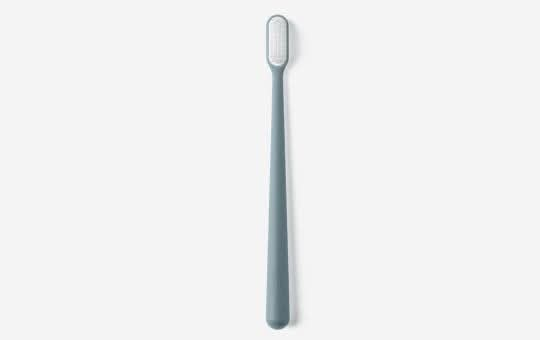
The handle’s built from FDA-approved recycled ocean plastic and designed to last decades; only the brush head gets replaced, roughly every three months, same as a normal toothbrush. BRiN says the swap cuts 90% of what would otherwise get tossed at the end of a toothbrush’s life cycle.
Made from Recycled Ocean-Bound Plastic
Brush heads use castor oil bristles instead of nylon, paired with recycled post-consumer plastic, and the whole head is 100% recyclable PLA. BRiN puts 3% of every sale toward ocean cleanup work in India, which works out to about 6 plastic bottles’ worth of ocean plastic removed per toothbrush sold.
Long-Term Environmental Impact
Packaging is fully compostable, no plastic wrap, no blister pack. A subscription option auto-ships brush head refills so replacing them doesn’t depend on remembering to reorder, and the handle itself, being reusable, only needs replacing if it actually breaks rather than on a schedule.
4. Smart Composting: Mill Kitchen Bin

Somewhere between 30 and 40% of the US food supply goes to waste, according to USDA. The Mill Kitchen Bin chips away at the slice of that sitting in one household’s trash. Not technically a composter, worth saying up front. It dries and grinds scraps into nutrient-dense grounds, a step before actual compost, not the finished product itself.
How It Reduces Food Waste
Drop scraps in. Bones, pits, whatever’s left over, Mill grinds and dries it overnight without a button pressed. Volume shrinks by about 80%, so what would’ve been a full trash bag compresses down to almost nothing, and at 6.5L, most households go a few weeks between emptying it, not once a day like a regular kitchen bin demands.
Odor-Free Operation
A carbon filter does the work here, swapped every 6 to 12 months. People who’ve actually run one describe waking up to a mild earthy smell, not garbage. Small kitchens benefit most. So do shared apartments, dorms, anywhere a stinking compost pail on the counter isn’t really an option.
What Happens to the Grounds
Not garden-ready straight out of the bin, that part matters. Mix them into an existing compost pile, or work them into soil directly, or set up a pickup and Mill routes them out to small farms, where the grounds end up feeding chickens or finishing out as farm compost somewhere else entirely.
5. Energy-Efficient Cooling: TCL Q-Series Window Air Conditioner

Old-school units run like a light switch, on, then off, then on again, temperature swinging the whole time between both. The Q-Series works more like a dimmer. Its Smart AI Inverter adjusts compressor speed instead of slamming on and off, holding rooms within ±1°F of whatever you set it to, and TCL claims up to 37 to 38% energy savings over a standard unit doing the same job in the same room.
Smart AI Inverter Technology
Quiet mode drops to 42dB. Library-level, roughly, which actually matters at 2am when the compressor kicks on and you’re trying to sleep through it. Runs off the TCL app. Or Alexa. Or Google Assistant, whichever’s already wired into the house, no manual dial fumbling in the dark required.
Energy Star Certification
Certified, and that’s not just a sticker TCL slapped on. It means independent labs confirmed the unit clears federal efficiency baselines instead of TCL just saying so on the box. One outlet’s testing measured a CEER rating of 15. Runs on R-32 refrigerant too, a lower-impact swap from what older units still use.
Cost Savings
TCL calls it FastFrame. Pre-assembled, cuts setup time compared to older window units; most people manage it solo in under an hour without a contractor anywhere near the house. Window size still matters, though, TCL specs a 26 to 36 inch opening for most models. Measure first. Buy second.
6. Water Conservation: Moen Smart Sprinkler Controller

EPA WaterSense estimates half of all outdoor water use goes to waste through leaky, badly timed irrigation, and a WaterSense-certified controller like this one can cut that by up to 30%, saving up to 15,000 gallons a year on an average home. Installs in under 30 minutes, no rewiring, no calling someone out.
Take Control Via Smartphone
Everything runs through the Moen Smart Water App. Turn zones on or off remotely, mid-vacation, mid-rainstorm, whenever. Weather skip watches the forecast and cancels a scheduled run automatically so a rainy Tuesday doesn’t get watered anyway, and each zone runs independently, meaning the flower bed that actually needs water isn’t getting soaked on the same schedule as grass that doesn’t.
Weather-Adaptive Watering
The controller checks local weather before every run and adjusts on its own. Add the optional Smart Wireless Soil Sensors, sold separately, and it goes further, monitoring moisture at 1, 3, and 5-inch depths so watering responds to what’s actually in the ground rather than a fixed calendar. Clay holds water longer than sandy soil does. The sensors account for that instead of guessing.
Installation and Compatibility
8-zone and 16-zone models cover most yard sizes. It also pairs with the Moen Flo Smart Water Monitor and Shutoff, if that’s already installed, so the two systems don’t work against each other. Some utilities offer rebates for smart irrigation upgrades, worth checking with your local water provider since programs vary by city and change often.
7. Indoor Gardening Made Easy: Click & Grow 25 Smart Garden

Pre-seeded pods, an 8W LED light, and a water reservoir handle the actual gardening. You add water and plug it in. That’s most of the labor, and the reservoir holds enough for about three weeks before it needs a refill, no daily watering is required.
Automated Light and Water
The system runs 25 growing sites on a rotating 5-week cycle, staggering roughly 5 plants at a time so there’s always something at a different growth stage instead of one big harvest and then nothing. No pesticides, no GMOs, and setup runs about 15 minutes according to Click & Grow, with maintenance dropping to roughly 10 minutes a month once it’s running. The grow light itself is rated for a minimum of 7 years before it needs replacing, longer than most kitchen appliances that people replace without a second thought.
Reducing Food Waste and Packaging
Harvest what’s needed for tonight’s dinner; leave the rest growing. That alone cuts into the grocery-spoilage problem most households deal with without really noticing it: herbs bought for one recipe, wilted in the crisper drawer a week later.
Aesthetic and Functional Design
Countertop-sized, it sits fine in a normal kitchen without eating up much space. A 2011 study in the Journal of Health Psychology found gardening lowered cortisol more effectively than 30 minutes of reading did, for whatever that’s worth to someone deciding between a countertop herb garden and a novel on the couch.
Conclusion: Embrace a Greener Lifestyle with Eco-friendly Technologies
Seven products. One thread runs under all of them. Each one takes something that used to be wasteful, plastic, standby power, an overwatered lawn, and gives it a fixed shelf life instead of an infinite one.
Ecobee thermostats alone have saved 53.9 TWh of electricity since launch, which works out to roughly the equivalent of taking every home in New York City and Los Angeles off the grid for an entire year. It’s just the same math playing out at a scale most people never see, small household devices quietly adding up into numbers that show up in national energy data eventually.
Steven Morgan, Licensed Master Plumber and HVAC certified, shared his story with us when he installed EcoBee at his house, “I put an EcoBee thermostat in my own place about two years ago. I could’ve gone with anything on the market, but I picked that one because it handles New York’s humidity and temperature swings better than the others I install for customers. What sold me was the remote sensors. My master bedroom runs warmer than the rest of the house in summer, and the hallway thermostat never caught it. With sensors placed in the rooms that matter, the system averages properly, and my wife stopped complaining about a hot bedroom. That alone was worth the price!”
A battery backup, a smarter AC, a countertop composter, they fix what one house burns and tosses, nothing bigger than that or maybe bigger than that if done by millions. Start with whichever one solves the loudest problem sitting in your own kitchen or utility closet right now. The rest can wait.
If you want to learn more about sustainability, you can read our sustainability guide.
FAQ
Stores energy. Solar, grid, doesn’t matter which, and releases it back when you actually need it instead of pulling fresh power constantly, which matters most during peak hours when the grid mix tends to be dirtiest.
IPX7-rated. Survives a meter of water for 30 minutes straight, beach sand, pool splashes, sudden rain, all fine, and solar charging keeps it running without a single disposable battery ever entering the picture.
The handle’s recycled ocean-bound plastic, built to last for decades, and only the head gets swapped every few months, so most of the actual toothbrush never sees a landfill at all.
A carbon filter handles it, shrinks scrap volume by about 80% overnight while you sleep. Worth remembering it’s not technically a composter, it produces dried grounds, a step before finished compost, not the finished thing itself.
Its inverter adjusts compressor speed instead of cycling fully on and off. Standard units waste most of their energy right there, in that constant on-off cycling, and this one just doesn’t do that.
Up to 30% less than a standard timer per EPA WaterSense estimates, roughly 15,000 gallons a year on an average home, most of which comes down to weather skip and per-zone scheduling quietly doing their job in the background.
Harvest only what a meal needs, leave everything else growing on its five-week rotating cycle. Sidesteps the usual problem entirely, buying a whole herb bunch, using a third of it, watching the rest wilt in the crisper drawer.