


Ten lanterns went through the wringer here. Metal, glass, mason jars, wall-mounted, staked, clipped. Five made the top picks, five didn’t, and the difference usually came down to one thing: a real spec you could check, versus a marketing number nobody outside the brand ever measured.
If you want a straight answer, the PASAMIC with the replaceable bulb is the one that actually lasts past the first battery. Everything else here has a place too, depending on whether you’re lighting a wedding or just a fence post.
Top picks
| Kit | Perview | Best For | Pack Size | What Sets It Apart |
|---|---|---|---|---|
| PASAMIC Solar Wall Lanterns with Replaceable Bulb | 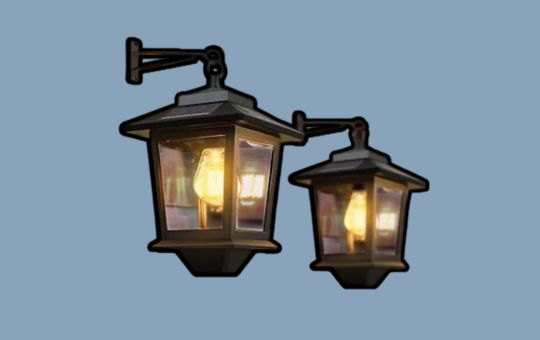 | Longest actual lifespan | 2 | Only lantern in the roundup with a swappable standard bulb, not tied to one sealed battery |
| VOOKRY Hummingbird Solar Wall Lanterns |  | Real visibility, not just ambiance | 2 | 150 lumens, actually bright, plus three panels for steadier charging through partial shade |
| KOOPER Metal Hanging Solar Lanterns | 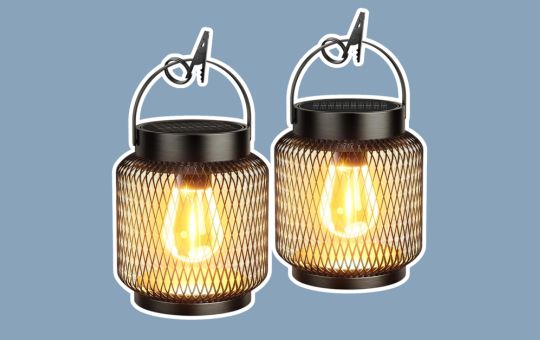 | Durability plus flexible placement | 2 | Rust-resistant metal body, clip-mount instead of stake-only, 15-hour runtime |
| GIGALUMI Hanging Mason Jar Solar Lights | 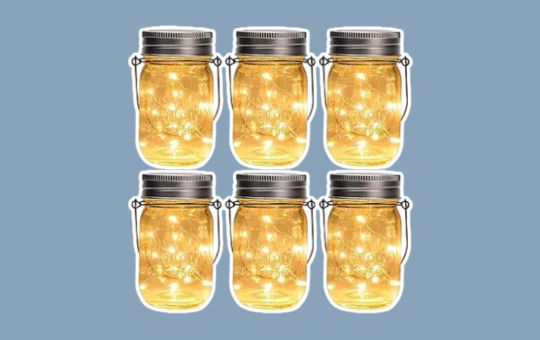 | Parties, weddings, full-yard setups | 6 | 30 LEDs per jar, works hung or set flat, real glass |
| TuyLuxe Solar Lanterns with Wall Mount Kit |  | Covering a lot of ground on a budget | 4 | Wall mount, clips, and hooks all included, highest quantity per pack of the strong picks |
1. MAGGIFT 34-Inch Hanging Solar Lights for Path
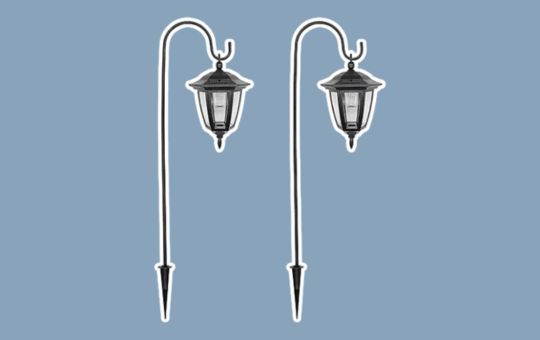
Two shepherd hooks, two lanterns, a light sensor doing all the work once it’s up. You stake the poles, screw them together, hang the lantern, and from there the panel handles dusk and dawn on its own.
There’s a pull tab hidden over the battery contact that trips people up more than anything else about this kit. The factory seal keeps the battery from draining in a warehouse somewhere before it ships. Pull it before the first charge.
Light output sits at 4 lumens. That’s dim. Candle-glow dim. Great for outlining a fence line or marking where a path bends. Useless if you’re trying to spot your keys in the grass.
The panel’s rated IP44. Rain and splashback, fine. A season sitting in standing water after a bad drainage spot, not fine, and that’s a distinction a lot of buyers miss on cheaper solar gear generally, not just this one. Shade cuts into both charge time and output pretty hard too, so wherever these end up staked needs real, direct sun for most of the day.
Pros
- genuinely no-wire setup, stake and hang, done in a few minutes
- auto on/off, no remembering to flip anything
- decent for pathway or fence-line accent lighting
Cons
- 4 lumens is dim; don’t expect real visibility
- needs consistent direct sun or output drops off
- easy to miss the battery pull tab and think it’s broken
2. KOOPER Metal Hanging Solar Lanterns (2-Pack)
Metal instead of plastic on this one. Heavy iron body, a rust coating baked in, and that’s the actual reason to consider it over a lot of the cheaper solar lanterns sitting next to it in search results, the ones that go brittle and yellow after a single summer outside.
Clips come attached instead of just a hook loop. Clip it to an umbrella rib, a fence rail, a low branch, anywhere really, which opens up more spots for these than a stake-only design ever could.
The solar panel’s monocrystalline, and KOOPER’s own listing claims a 40 percent jump in conversion rate over a standard panel. That number’s unverified, comes straight from the brand, monocrystalline genuinely does beat the cheaper amorphous panels, so the underlying claim holds even if the exact percentage doesn’t.
Runtime’s rated up to 15 hours per charge. Covers a full winter night without a problem, where a lot of cheaper lanterns tap out around hour eight or nine and leave a dark porch by 2 am.
No lumen count listed anywhere in the specs either. Odd omission for a “brighter” pitch, and it means brightness here is a guess until the thing’s actually plugged in and lit.
Pros
- Metal build actually holds up outdoors instead of degrading in a season
- Clip mount is way more flexible than a stake or hook alone
- 15-hour runtime covers longer winter nights better than most competitors
Cons
- The “40% more efficient” panel claim is the brand’s own number, not third-party verified, no listed
- Lumen output anywhere in the specs, so you’re kind of guessing on actual brightness
- Metal means more weight; a stiff wind on a thin branch could be an issue, clip-mounted
3. Derynome Solar Hanging Lantern Lights
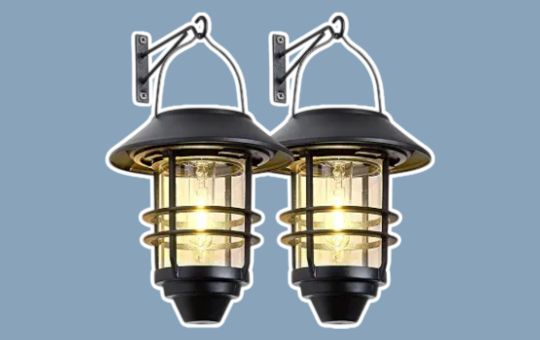
At 2.7 pounds and 11 by 6 by 6 inches each, this is the heaviest thing in the roundup so far, which matters more than it sounds like it should, because a lot of hanging solar lights assume a flimsy hook or a thin branch will hold them fine, and this one just won’t work that way. It comes with an actual wall mount kit in the box, screws included, built for something bolted to a real surface, a porch post or a fence rail, rather than something staked into dirt or clipped onto whatever’s nearby.
The look leans retro. Glass shade, metal frame, the kind of thing that reads more like a small carriage lamp than a plastic garden stake.
Power runs off a built-in lithium-ion battery that’s sealed into the housing, and that’s worth sitting with for a second. Most of the other lanterns in this list use a removable AA or NiMH pack you can pop out and replace when it stops holding charge.
This one doesn’t give you that option. The battery is the light, in a sense, since when it degrades, and rechargeable batteries all eventually do, there’s nothing to swap. You’re looking at a shorter effective lifespan than a lantern built around a replaceable cell, even if day-to-day performance is fine while the battery’s still healthy.
One actual owner review calls it a warm ambient glow, not super bright, but enough light to notice at night. That tracks with what glass-shade retro designs usually deliver. They’re going for atmosphere first.
Pros
- Wall mount kit included, no separate hardware purchase needed
- Solid metal and glass build, feels sturdier than the stake or clip options
- Warm retro look if that’s the aesthetic you’re going for
Cons
- Sealed lithium-ion battery means no swapping it out down the line; the light’s lifespan is tied to that one battery
- Heavier and bulkier, needs a real mounting surface
- Dim by design; atmosphere over actual visibility only
- Comes as a 2-pack, no smaller or larger options if you need to cover more ground
4. Ahaorigin High Brightness Solar Lanterns (2-Pack)
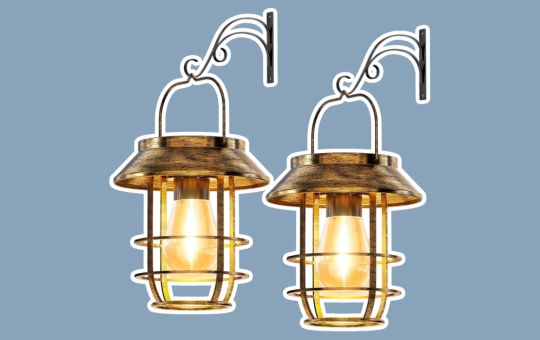
Spend enough time comparing hanging solar lantern listings, and a pattern jumps out fast: the bullet copy across half a dozen different brands reads almost identically. Same 30 percent claims, same monocrystalline mentions, same IP65 badges.
That’s less about brands copying each other and more about a handful of factories supplying nearly identical hardware to dozens of storefronts, each one slapping its own name and packaging on top. Worth keeping in mind before assuming every new listing is a meaningfully different product.
The monocrystalline panel here claims over 12 hours of light per charge, a number the brand puts at 30 percent above average competitors. That percentage came from Ahaorigin, not an independent lab, so treat it as a marketing figure rather than a measured one. Twelve-plus hours off a decent panel is plausible on its own merits, regardless of where the 30 percent came from.
This particular one ships with a 6.2-inch metal hook already attached, so there’s no separate hardware to track down or improvise, which sounds minor until you’ve dealt with a lantern that arrives with no hook at all.
Pitched for camping as much as yard use, and the built-in hook earns its place there; hanging off a tent pole works about as well as hanging off a porch rail.
Pros
- Pitched and reasonably suited for camping use too, not just fixed yard spots
- IP65 rating holds up in real rain and snow, not just light splashing.
Cons
- Runtime claim is the brand’s own number again, no independent test behind it.
- Nearly identical spec sheet to at least two other lanterns already covered here, so don’t expect it to outperform them meaningfully.
- Retro metal look won’t fit every yard aesthetic.
5. PASAMIC: Solar Hanging Lights
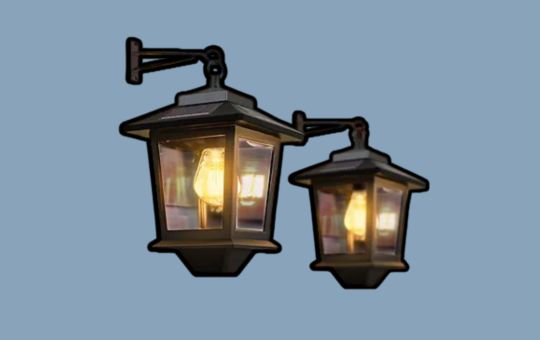
Standard E26 base, compatible with S14 bulbs. That single spec matters more than almost anything else in this write-up, because it’s the first lantern in this entire roundup where the actual light source can be swapped out with a bulb you can buy anywhere, not a sealed battery or a fixed LED soldered into the housing. Everything else covered so far either locks you into the battery’s lifespan or the bulb’s, whichever fails first.
Four solar panels feed a 2000mAh battery, notably larger capacity. Charge time runs 6 to 8 hours for 8 to 12 hours of light after dark, in line with the category, but four smaller panels spread across the housing pick up more usable light through a partial-shade day than one big panel angled wrong.
Body’s aluminum with an anti-UV outdoor paint finish, tempered glass around the bulb itself. That combination is built specifically to resist the two things that kill cheaper lanterns over time: rust from the metal and fading or clouding from the glass.
Comes with wall mount brackets and screws, though the hanging loop on top means it works just as well off a shepherd hook or a plant hanger if wall mounting isn’t the plan.
Pros
- Replaceable standard bulb, first in this roundup, extends real lifespan past a single sealed battery.
- Four solar panels mean more consistent charging through partial shade
- Aluminum and tempered glass build, genuinely built for long outdoor exposure
Cons
- IP44 rating, a step below the IP65 rating several other lanterns here carry
6. Tomshine Boho Solar Lights
Tomshine’s own instruction manual for this exact model includes a line that never made it into the Amazon listing: replace the rechargeable battery roughly every 12 months. That’s a real maintenance schedule from the manufacturer, buried in a PDF most buyers never open, and it changes the ownership math compared to a lantern with a sealed cell you just throw out once it dies.
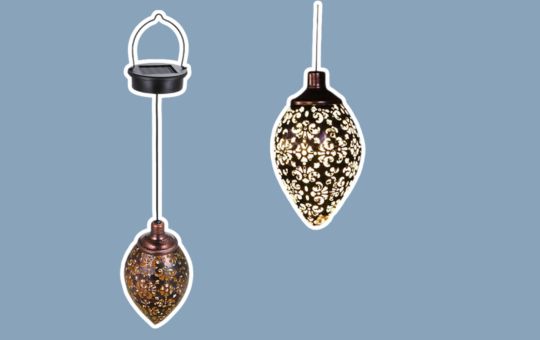
Someone hanging this in a small courtyard, a balcony rail, a tight spot between two planters, gets more out of it than someone trying to line a long driveway. It’s built small, around 11 by 11 by 41 centimeters, and the carved metal shell projects a pattern of light and shadow- not much of a usable beam, so if you want a path light? This is not.
That shell is the actual draw here. Olive-shaped, punched through with a design that catches the LED behind it and throws shapes across the ground and nearby walls once the sun goes down, it is also metal, and it’s been around since 2020 with thousands of buyers weighing in on it since.
Battery swap aside, day-to-day performance sits right in line with everything else covered so far. Roughly 6 hours of charge for 8 to 10 hours of light after dark, nothing that separates it from the pack on paper.
Buy it for the shape it throws on the patio floor.
Skip it if you need actual functional lighting anywhere near it.
Pros
- Battery is user-replaceable; the manufacturer even tells you the recommended swap schedule
- Compact and light, fits tight spaces other lanterns here can’t
- Distinct carved-shadow look, not just another plain glass or metal shell
Cons
- Decorative only, not a real source of usable light.
- Battery swap requires actually opening the unit yourself; not plug-and-forget.
- Small size means a small light pool per unit
7. GIGALUMI Solar Mason Jar Lights
Six mason jars, each with a lid that packs 30 LEDs. That density changes what these are actually good for. A wedding, a backyard party, a whole fence line lit up at once, somewhere volume matters more than any single light being especially bright.
Real glass, standard 16-ounce mason jars, 3.2 inches across and 5.3 inches tall. The lid does double duty as the light fixture and the seal, and the whole thing works two ways: hang it from a branch or a hook, or set it flat on a table or step and let it work as a mood lamp instead.
Nobody else covered so far offers that flexibility; everything up to this point has been hang-only.
Being actual glass instead of plastic or metal is a real tradeoff worth sitting with before six of these end up scattered around a yard full of kids or dogs. A dropped jar doesn’t dent; it shatters, and that’s a cleanup situation none of the plastic or metal options in this roundup carry.
Runtime lands at 8 to 10 hours after a full charge, average for the category, nothing that stands out either direction.
Pros
- 30 LEDs per jar means real coverage per unit, not just accent glow
- Works hung or set flat, genuinely more versatile than most of this list
- Six in a set covers a lot more ground for parties or full-yard setups
Cons
- Glass jars break if dropped, unlike anything else reviewed here
- 8 to 10 hour runtime is average, not a standout
- Less suited to a quiet single-lantern accent look, more built for going all in
8. TuyLuxe Solar Lanterns with Wall Mount Kit (4-Pack)
Four in the box here, twice the quantity of most 2-packs covered already, and useful if you’re actually trying to line an entire fence or backyard border rather than accent two spots.
Body’s ABS plastic. Lighter, won’t rust, cheaper to make, and that tradeoff shows up over the long run. UV exposure and years of sun eventually make ABS brittle in a way rust-resistant metal generally handles better, so expect a shorter outdoor lifespan than the metal options covered earlier in this list, even with the same IP65 rating protecting against water.
Charging claim is 6 to 8 hours of sun for 12 to 15 hours of light after dark, on an 800mAh battery through a monocrystalline panel rated at up to 30 percent conversion efficiency. That efficiency number’s the brand’s own, standard for this category at this point, worth remembering it’s marketing math rather than an independent test result.
Comes stacked with mounting options too. Wall mount hardware, clips, and metal hooks all included in the same package, so depending where these end up- on a fence post, clipped to a tree branch, hung off a porch rail, or just set flat on a table- the hardware’s already there for whichever one you pick.
Pros
- Four units per pack, better for covering a full yard or fence line at once
- Wall mount, clips, and hooks all included, covers almost any install scenario
- 12 to 15 hour runtime claim is on the high end for this category
Cons
- ABS plastic won’t hold up outdoors as long as the metal-bodied lanterns in this list
- 30 percent efficiency figure is unverified, brand’s own number
9. VOOKRY Hummingbird Solar Wall Lanterns (2-Pack)
The hummingbird bracket does more than hold the lantern. Rated to hang plants, wind chimes, and bird feeders too, so it’s really buying a small multi-use hook with a light attached, not just a light with a decorative accent bolted on.
150 lumens. First real number in this whole list you can hold up against another and actually compare, since most listings covered so far either bury the number or skip it entirely. For scale, that’s roughly 35 times brighter than the MAGGIFT stake lights from earlier in this roundup. Different price bracket, different install method too, so it’s not a fair straight swap, but it does mean this is the first lantern here you could plausibly use for real visibility rather than pure ambiance.
Three separate solar panels feed it instead of the usual one large panel. That’s a real functional difference. Spread panels across a slightly different mounting angle and the whole unit keeps collecting light even as the sun moves through the day, where a single fixed panel loses most of its charge the moment shade creeps over it.
Construction splits the difference on materials. Metal wall bracket, plastic solar housing on the light itself. Rust resistance on the metal side, but the plastic body carries the same long-term UV brittleness concern, just isolated to a smaller part of the unit.
Pros
- 150 lumens is genuinely bright compared to almost everything else in this roundup
- Three solar panels keep charging through partial shade better than a single-panel design
Cons
- Fixed wall-mount design, less flexible than clip or stake options for placement
10. Kolpop Jar-like Hanging Solar Lights
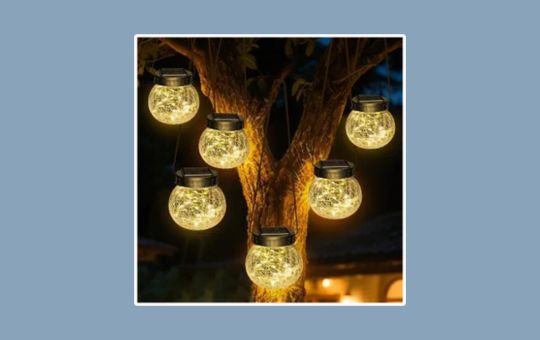
The solar panel here is polycrystalline, not monocrystalline. That’s a real material difference. Polycrystalline panels are generally a notch less efficient per square inch of panel than monocrystalline, cheaper to produce too, which is part of why this whole 6-pack likely costs less than a 2-pack of the metal monocrystalline lanterns earlier in this list.
Each globe holds 30 LEDs behind a crackled glass shell, similar idea to the GIGALUMI mason jars, dense LED count spread across real glass rather than one bulb behind plastic or metal. The crack pattern in the glass itself does the visual work here, scattering warm white light unevenly rather than in a clean beam, which reads more like candlelight through ice than a functional light source.
Charge and runtime land at 6 to 8 hours of sun for 9 to 12 hours of light, middle of the pack for this whole roundup, nothing that stands out on paper against the others.
Six units, real glass, means six chances for something to crack if it gets knocked off a hook or a tree branch in a storm. Same tradeoff as the mason jar set, so be wary of kids or pets having easy access to it.
Pros
- 30 LEDs per globe, dense enough for real visual impact across a fence or tree
- Six units per pack covers a lot of ground for the price
- Crackle glass gives a genuinely distinct look from plain metal or plastic shells
Cons
- Polycrystalline panel is a step down in efficiency from the monocrystalline panels most of this list uses
Common FAQ
Yes, just like your smartphone. The rechargeable battery inside is the part that degrades, not the solar panel itself. Most of these batteries are rated for somewhere between 300 and 500 full charge cycles before they start holding noticeably less charge. Translate that to actual days outside and you’re looking at roughly 1 to 3 years of solid performance depending on the battery type and how much sun the panel actually gets. Lights with a swappable battery or bulb get around this. Lights with a sealed unit just get dimmer and dimmer until you replace the whole thing.
A few usual suspects. The battery’s aging out and can’t hold a full charge anymore, which is normal after a year or two of daily cycles. Or the panel isn’t getting enough direct sun during the day; shade for even part of the afternoon cuts the charge down hard. Dirt and grime on the panel surface block light too, and it’s an easy thing to forget to wipe down. The on/off switch: a lot of these lights ship with the switch off by default and won’t charge at all until it’s flipped on, which looks exactly like a battery problem when it isn’t one.
The LED itself will outlast everything else in the fixture, most rated for 25,000 to 50,000 hours, which is basically decades of nightly use. The battery’s the real bottleneck, 1 to 3 years before performance drops off noticeably. The housing and panel, if they’re decent quality and not sitting in standing water, can run 3 to 5 years or more. Add it up, and most solar lights are realistically a 2 to 4 year purchase before something inside them needs replacing or the whole unit gets swapped out.
Command hooks rated for outdoor use handle a surprising amount of weight without a single hole in anything. Shepherd hooks staked straight into soil work for anything near a flower bed or fence line. Tension rods wedged between two surfaces, a fence post and a wall, or a porch beam, hold string lights or lanterns without hardware too. Removable adhesive strips work for lighter lanterns on smooth surfaces like glass doors or vinyl siding, though check the weight rating before committing; some of the metal lanterns covered in this list are heavier than they look. Zip ties around an existing rail or branch are the fastest option of all, ugly if you look closely, and invisible once it’s dark.
Conclusion
That’s most of it: no wiring, no electrician, no monthly bill. Whatever you land on, check the pack size against how much ground you’re actually trying to cover before you check out; that’s the detail that trips people up more than any spec on this list.
We have a full guide on solar energy and how it works; check it out.
Let us know in the comments if you have solar lights or you have purchased one from this list; how are they holding up so far?
How we wrote this review: We put together this review through inspecting specs, reviews, and the overall quality of the products, comparing materials, customer feedback, etc, and not through live experience. We are basically your search buddies, so instead of looking through dozens of them, we handpicked the best of all to make your search process a lot easier.