

The last few years have been huge for renewable energy, and the momentum isn’t slowing down. There are a lot of big renewable energy projects under construction.
Below you’ll find a list of the biggest renewable energy projects in the works around the world. Since they tend to be the largest when measured in megawatts (MW), hydropower projects show up a lot on this list. They can only be placed in locations with exactly the right conditions, though, so there are plenty of solar, wind, storage, and geothermal on the way as well.
Grand Inga Hydroelectric Project — 40,000 MW – DR Congo
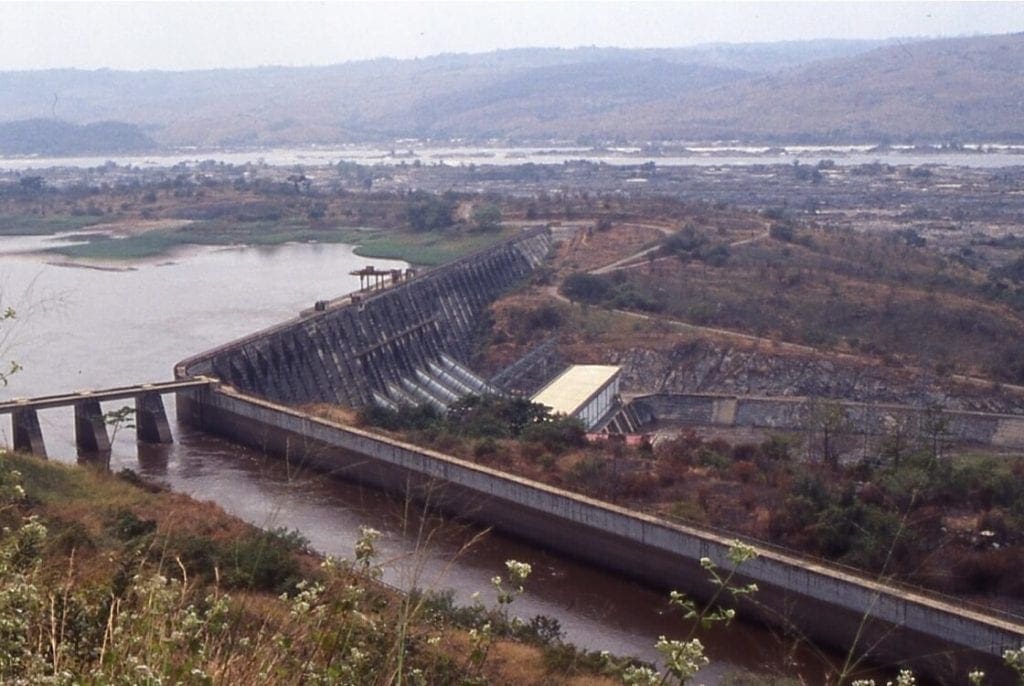
This proposed project, when completed, will be twice as large as the largest dam currently operating anywhere in the world. It’s located in the western part of the Democratic Republic of the Congo, approximately 30 miles upstream of the mouth of the Congo River. The full Grand Inga complex will cost about US$80 billion and provide electricity to people all across Africa and possibly even in Europe.
As of 2026, the full Grand Inga project remains in pre-construction. The first phase (Inga 3, 11,000 MW) has received renewed backing from the World Bank and GE, but no construction has begun. Financial close is targeted for 2025–2026, with an 8–10-year build time after that.
Gansu Wind Farm Project —20,000 MW — China
The Gansu Wind Farm Project, also known as Jiuquan Wind Power Base, is operational but has reached only around 10 GW of its planned 20 GW target by the time the latest phase was completed. Expansion continues, with total Jiuquan-area new energy capacity now exceeding 33 GW across wind and solar combined. The project consists of 18 wind farms in China’s Gansu province and consists of three phases.
Baihetan Hydroelectric Project – 16,000 MW – China
The state-owned power company behind the world’s largest operating dam is also behind this huge 16,000 MW hydroelectric plant on the lower end of the Jinsha River in Southwestern China.
Baihetan became fully operational in December 2022. It is now the world’s second-largest hydroelectric power station by installed capacity, behind only China’s Three Gorges Dam.
The dam controls a basin area of approximately 430,300 km² (166,000 square miles).
Belo Monte Hydroelectric Project– 11,233 MW – Brazil
The Belo Monte hydroelectric project is located on the Xingu River in Brazil. Construction began in 2011 and was completed in 2019, and is now fully operational. It remains Brazil’s largest hydropower plant and the fifth-largest in the world by installed capacity.
Plans for the project began back in 1975 but were temporarily shelved due to opposition from the public that stemmed from its potential impact on nearby populations. Although the project eventually began to move forward, it still faces controversy. Post-completion monitoring has confirmed significant ongoing ecological impacts on the Xingu River, including disrupted fish migration and drought in the Volta Grande section.
Wudongde Hydroelectric Project— 10,200 MW — China
The Wudongde project is another large dam located on the lower reaches of China’s Jinsha River. In fact, this dam is part of a larger initiative involving four dams downstream of the Jinsha. Baihetan is another, and the other two facilities have already been completed.
Preliminary work began in 2010 and began in earnest in 2015; it became fully operational in June 2021. At 10.2 GW, it is China’s fourth-largest and the world’s seventh-largest hydropower station.
Adani Renewable Energy Park— 10,000 MW — India
Solar energy is making up a considerable portion of the world’s energy generation, and Adani Renewable Energy Park is the first evidence of that on the list. Located in Rajasthan, India, the project consists of multiple smaller solar parks that together generate a total of 30,000 MW. The first phase of the initiative includes a 1,500 MW facility in Fatehgarh, Jaisalmer, and a 500 MW solar park in Bhadla, Jodhpur.
TaSang Hydroelectric Project — 7,110 MW — Myanmar
The governments of Myanmar, China, and Thailand plan to build several dams on the Salween River in Myanmar, the largest of which would be TaSang. It was expected to have a 7,110 MW capacity and be taller than the world’s largest dam. The groundbreaking ceremony occurred in 2007, but construction has stalled due to controversy and civil unrest.
As of 2026, Myanmar’s ongoing civil conflict following the 2021 military coup has made progress on this project effectively impossible in the near term. No meaningful construction activity has taken place.
Grand Ethiopian Renaissance Dam — 6,450 MW — Ethiopia
Another hydroelectric project that’s mired in controversy, the Grand Ethiopian Renaissance Dam.
GERD was officially inaugurated on September 9, 2025. With an installed capacity of 5,150 MW (not 6,450 MW as some earlier estimates projected), it is now the largest hydropower plant in Africa. Disputes with Egypt and Sudan over Nile water rights remain unresolved.
It’s located on the Blue Nile near the border of Ethiopia and Sudan. Many in Egypt oppose it because they fear it will disrupt their water supply. Others insist the project will be environmentally, economically, and socially beneficial.
Asian Renewable Energy Hub — 6,000 MW — Australia
This renewable energy project is unique because it will consist of a combination of wind and solar energy, and although it will be located in Western Australia, it will export its energy to Southeast Asia through underwater transmission cables. It will be situated on about 5,400 square miles and consist of 26 GW of wind and solar.
The project was renamed the Australian Renewable Energy Hub and substantially redesigned, shifting from undersea power cables to green hydrogen exports. BP, which held a 63% stake, withdrew in July 2025, leaving the project’s future uncertain. As of 2026, no construction has begun.
Dasu Dam — 4,3020 MW — Pakistan
The Dasu Dam is located on the Indus River near Dasu, Pakistan. The facility will be constructed in two phases. Stage I has been repeatedly delayed due to security incidents, land acquisition issues, and funding bottlenecks. As of 2026, main dam construction is underway, with electricity generation now targeted for 2027.
When both phases are completed, Dasu will generate 4,320 MW and take up about 15 square miles of land.
Conclusion
Along with a few wind and solar farms, a lot of hydroelectric projects made the list, but rest assured that there are plenty of small solar and wind facilities that generate large amounts of power when their capacities are combined. Another trend you may have noticed is that many of the largest projects are occurring in Asia, perhaps a significant shift in the countries investing the most in renewable energy.
 Earthava is an environmental collective designed to turn awareness into impact. From deep dives into ecology to daily sustainable swaps, we provide the tools and intel you need to protect the ground you stand on.