

Looking for the best solar generator? We evaluated top-rated models based on customer reviews, power capacity, and durability, so you can choose one that truly works. In this guide, you’ll get the top 10 solar generators for emergencies, camping, and home backup, based on real-world specs and verified user experiences.

Top 5 Picks
| # | Perview | Product name | Rating | Where to get |
|---|---|---|---|---|
| 1 | 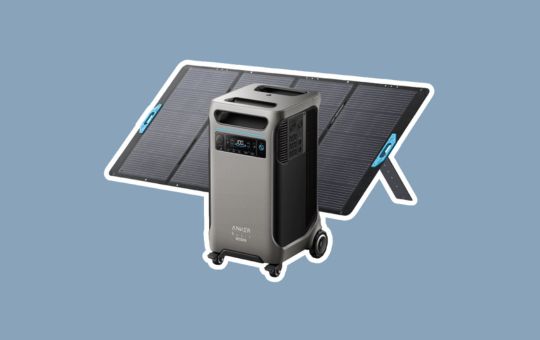 | Anker F3800 Solar Power Generator | 5 | Buy on Anker |
| 2 | 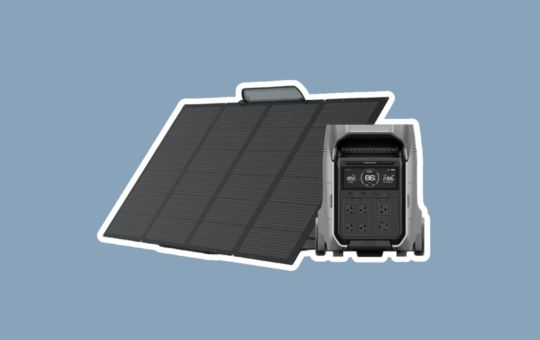 | ECOFlow DELTA Pro 3 Solar Generator | N/A | Buy on ECOFlow |
| 3 | 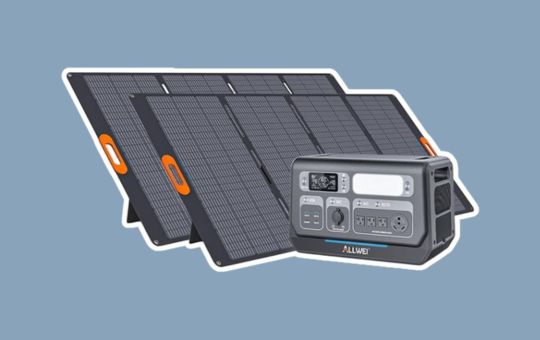 | ALLWEI LiFePO4 Solar Generator 2400W with 2x 400W Solar Panels | 4.4 | Buy on Amazon |
| 4 | 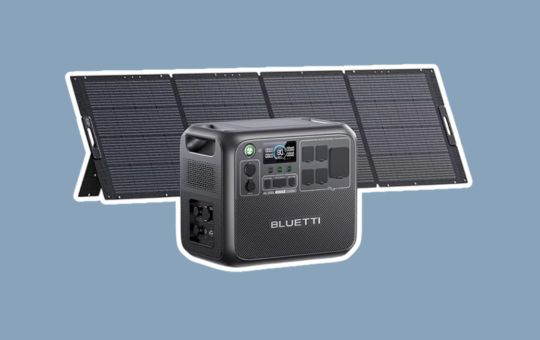 | BLUETTI AC200L with 350W Solar Panel | 4.5 | Buy on Amazon |
| 5 | 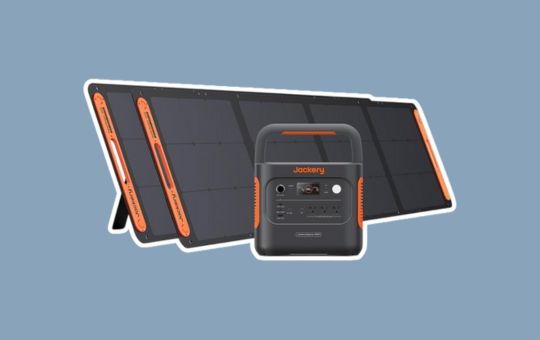 | Jackery Solar Power Generator | 4.8 | Buy on Amazon |
As we venture into the great outdoors, or if you just want a reliable backup for your home, having a stable source of power becomes necessary. Whether you’re planning a camping trip, an RV adventure, or simply looking for an emergency backup, a solar generator is a must-have.
We understand the importance of sustainable energy solutions for off-grid enthusiasts. That’s why we’re excited to share our comprehensive guide to the best solar generators on the market, helping you make an informed decision for your next adventure.
These innovative devices harness the sun’s energy, providing a clean and efficient power source wherever you go. With various models from leading brands like Anker and BLUETTI available, we’ll explore their features, capacities, and applications to find the perfect match for your sustainable getaway.
Key Takeaways
- Top-rated portable solar generators for off-grid adventures
- Key features to consider when choosing a solar generator
- Leading brands like Jackery and BLUETTI, and their offerings
- Applications for different adventure styles and power needs
- Tips for selecting the right solar generator for your sustainable getaway
We didn’t test these solar generators ourselves, but we selected them based on genuine user feedback, performance specs like battery capacity and wattage, and durability ratings. Our approach guarantees you get recommendations grounded in real use and reliable data.
1. Anker F3800 Solar Power Generator
The Anker SOLIX F3800 is built with one clear mission in mind: powering entire homes or high-demand setups with surprising ease. According to our research, this system stands out for its impressive output, a massive 6,000W of AC power and 120V/240V split-phase compatibility, which makes it one of the few portable units that can actually handle appliances like dryers, well pumps, or even EVs.
This model is often compared to similar heavyweights like the EcoFlow Delta Pro or Bluetti EP500, but what’s immediately clear, based on real user reviews and spec comparisons, is that Anker focused heavily on ease-of-use and scalability. You can stack up to 6 units together, and it plays nicely with Anker’s Home Power Panel for full integration into a backup setup. That’s a big deal if you’re preparing for longer outages or want a system that grows with your needs.
One standout feature: the plug-and-play RV readiness. It comes with a 120V/240V 14-50 outlet, which makes it one of the few solar generators that RVers and vanlifers don’t need to “tinker with” to get working. That, and the ultra-fast recharging time, 2.7 hours with solar or 1.4 hours via AC, based on Anker’s specs, puts it ahead of the curve for serious mobile setups.
Now, on the flipside, it’s heavy. 132 lbs heavy. Several buyers mentioned that while the wheels and suitcase handle help, this is not something you’re casually moving around a campsite or lifting without assistance. It’s better suited for semi-permanent setups: home backup, large RVs, off-grid cabins. Not quick weekend trips.
✅ Pros
- Home-ready power: 6,000W output and 240V split-phase capability
- Modular and expandable: Stackable up to 53.6kWh total capacity
- Fast recharge: Solar input up to 2,400W; full charge in ~2.7 hours
- RV/EV-friendly: Built-in 14-50 port for direct plug-in
⚠️ Cons
- Hefty build: At 132 lbs, it’s not practical for frequent lifting or casual portability
- Pricey upfront: Investment makes more sense for serious backup or full-time RV users
Earthava’s Take: If you’re looking for a solar generator that feels less like a gadget and more like a full-fledged backup system, the Anker SOLIX F3800 has earned its place in that conversation. It’s ideal for homeowners preparing for outages, full-time RVers, or anyone building toward energy independence. It’s reliable, scalable, and thoughtfully designed. Just be ready for the weight; this is a beast in both power and size.
2. ECOFlow DELTA Pro 3 Solar Generator
EcoFlow DELTA Pro 3 stands out for one big reason: it’s built for people who need real, high-output power, without the noise and fuel smell of traditional gas generators.
This model is the newest evolution in EcoFlow’s lineup, and it’s clear they’ve been listening. The DELTA Pro 3 delivers a whopping 4000W of AC output and can surge up to 8000W, which, for context, is enough to keep an entire home humming, fridge, well pump, AC unit, and lights- all at once. It’s not just for weekend campers or people charging phones in the backyard. This is the kind of system people are turning to when they want to prepare for serious outages or build more energy independence, especially in places where the grid feels less and less dependable.
The standout, in our view? The customizable ecosystem. Users can connect up to three of these units and multiple battery packs to build a full-blown off-grid setup. And the control you get through the EcoFlow app, from setting charging priorities to scheduling discharge times, shows just how much thought went into making this system feel modern, even elegant.
The size and weight are no joke. This is a heavy machine, over 100 lbs on its own, and while the wheels help, it’s not something you’ll casually move around the house. Some users also mentioned a learning curve. There’s power here, but also complexity. You’ll want to spend time with the manual and app to get the most out of it.
As for the included PV400W panel, it’s a rigid, glass-covered panel designed for serious solar intake, not a flimsy fold-out for emergencies. It’s better suited for permanent or semi-permanent setups, and while it charges effectively (users report strong output on sunny days), you’ll need space to deploy and angle it properly. This isn’t a casual, on-the-go panel.
From what we’ve seen across hundreds of reviews and spec comparisons, the DELTA Pro 3 seems best suited for two types of people: homeowners looking to back up basic circuits during outages, and off-grid enthusiasts building a long-term energy solution. It’s also drawing attention from RVers and tiny-home dwellers who want something quieter and cleaner than a fuel generator, but still powerful enough to support real appliances.
✅ Pros
- Massive 4000W AC output, expandable to 12,000W
- Integrates with the EcoFlow ecosystem and app for smart control
- Built-in UPS function for near-instant switchover during outages
- Solar charging supports up to 1600W (with multiple panels)
⚠️ Cons
- Heavy and not very portable; over 100 lbs
- Higher upfront cost, especially with add-ons
- Some users report a learning curve for setup and app features
Earthava’s Take: The DELTA Pro 3 is an energy system. If you’re serious about backup power or stepping toward off-grid life, this unit has the reliability and flexibility to grow with you. It’s not the cheapest, and it’s not the simplest. But it’s smart, strong, and remarkably dependable.
3. ALLWEI LiFePO4 Solar Generator 2400W with 2x 400W Solar Panels
ALLWEI 2400W LiFePO4 Solar Generator Kit is not lightweight, literally or metaphorically. It combines a 2048Wh battery (expandable to a hefty 10,240Wh if you ever need more) with two 400W solar panels, which can pull in a full charge in around 4–6 hours of solid sunlight. Not bad for a setup this powerful.
What makes it stand out, though, is its UPS (uninterruptible power supply) feature. In simpler terms, if the power suddenly cuts out, whether you’re working from home or keeping a fridge running, this unit kicks in automatically. That alone has made it a quiet favorite for folks in areas with frequent outages. Not everyone needs that kind of backup, but if you do, it’s reassuring.
Of course, there’s always a trade-off. Several users mentioned that while the solar input is impressive, the bulk and weight of the panels and station together aren’t exactly weekend-camping friendly. This setup’s best suited for semi-permanent use: parked RVs, cabins, garages. Not something you want to carry up a trail or shift around daily.
Still, once it’s in place, it just works. Four AC outlets, USB-C, car port, and even solar panel pass-through charging—it covers the bases. The LiFePO4 battery chemistry also gives it longer life cycles, and it runs cooler than typical lithium-ion stations. That means fewer worries about overheating or degradation over time.
✅ Pros
- Solid backup power: UPS mode kicks in seamlessly during outages
- Fast solar charging: Up to 800W input with included panels
- Expandable: Battery can grow with your needs (up to 10,240Wh)
- Long-lasting: LiFePO4 chemistry offers 3500+ cycles
⚠️ Cons
- Heavy and bulky: Not ideal for frequent moving or minimalist setups
- Premium price: It’s an investment, especially with panels included
Earthava’s Take: The ALLWEI 2400W system is dependable, powerful, and built with long-term use in mind. It’s a smart choice for those who want serious off-grid capability or simply want to stop worrying about what’ll happen when the grid flickers out again.
4. BLUETTI AC200L with 350W Solar Panel
The BLUETTI AC200L is a high-capacity solar generator paired with a 350W panel, and while the two components ship separately, together they offer a well-rounded solution for folks who want real peace of mind during blackouts or off-grid adventures. It’s often praised for its power output and versatility, especially in homes looking to reduce dependence on the grid or in RV setups where quiet, clean energy matters.
It has a 2048Wh LiFePO4 battery, the kind that offers longer lifespans and better safety than older lithium-ion models. According to user reviews and independent tests, it can handle most needs with ease: fridges, lights, even power tools. BLUETTI’s 3600W power lifting mode especially stands out. It’s not something every solar generator offers, and it means you can briefly run heavy appliances (like space heaters or electric kettles) without tripping the system. That kind of flexibility matters, especially in emergency settings where you don’t want to stress over what’s plugged in.
The unit isn’t small, and users do point out the weight and bulk as a tradeoff. It’s around 62 pounds without the solar panel, which makes portability a little more complicated unless you’re planning to keep it parked in one spot. There’s no built-in handle design like some other models offer, either, so lifting it solo might be tough.
✅ Pros
- Impressive output: 2400W AC (3600W surge) runs large appliances
- Long-lasting battery: LiFePO4 with over 3,500+ life cycles
- Expandable: Supports extra batteries if your power needs grow
- Clean solar integration: Includes a 350W solar panel for renewable charging
- Quiet and fume-free: No gas or noise, just steady backup power
⚠️ Cons
- Heavy to move: About 62 lbs, not very grab-and-go
- Panel and generator ship separately: Requires some setup planning
- Not the fastest solar recharge unless you upgrade the panel array
Earthava’s Take: If you’re preparing for blackouts, building a reliable off-grid system, or simply want a solar generator that can truly power your needs, the BLUETTI AC200L is one of the most capable mid-to-high-tier options out there. It’s not the most portable in the bunch, but it offers something that’s arguably more important: confidence. And in the world of backup energy, that’s worth a lot. It’s especially ideal for homeowners, RV travelers, or anyone who’s grown tired of the noise and fuel costs of gas generators and is ready to make a smarter, cleaner upgrade.
5. Jackery Solar Power Generator
There’s a certain kind of person this generator keeps showing up for, not the “I just need to charge my phone in the park” type, but the ones who want real backup. The kind you don’t have to think twice about when the power cuts unexpectedly, or when you’re halfway into the desert with a fridge full of food and work still to do. That’s where the Jackery Solar Generator 2000 v2, paired with two 200W solar panels, quietly earns its keep.
This setup includes the Explorer 2000 Plus, a hefty 2042Wh LiFePO4 power station, and two foldable 200W SolarSaga panels. On paper, it’s a high-capacity solar kit with serious output: 2200W of continuous power, expandable battery support, and all the ports most people ever need, including a 100W USB-C PD for fast laptop charging. But stats aside, what it’s known for is dependability. People count on it to keep full-size fridges running, to power CPAP machines through the night, to stay online during storms or blackouts.
One feature that stood out is the 20-millisecond UPS function. It’s not the kind of thing you appreciate until you lose unsaved work or internet access at exactly the wrong time, but users who’ve relied on it say it delivers. It quietly bridges that moment between grid loss and generator takeover, helping keep routers, desktops, or even critical devices online without hiccups. For anyone managing remote work or necessary care equipment, that can make a real difference.
Now, as capable as it is, it’s not what you’d call travel-light. Weighing over 60 pounds, the station is solid, sturdy in a reassuring way, but not something you’ll want to haul around casually. The panels are lighter and foldable, but they take up space. So it’s not a minimalist setup. It’s for people who have a place for it, a corner in the RV, a home base, a garage shelf near the emergency kit, and a reason to want full-scale power when things go sideways.
It charges surprisingly quickly for its size. With good sun and both panels working, users report a full recharge in around six hours, which is impressive considering what it can store. And the switch to LiFePO4 battery chemistry gives it a longer lifespan and added thermal safety, which matters if you’re planning to rely on it for the long haul.
✅ Pros
- High-capacity 2042Wh battery handles heavy loads like fridges and power tools
- UPS mode with fast 20ms switchover protects sensitive devices during outages
- USB-C PD 100W port supports fast laptop and device charging
- Quiet operation and fume-free, safe for indoor use
- Long-lasting LiFePO4 battery with up to 10 years of use (based on cycles)
- Solar recharging is efficient with two 200W panels included
⚠️ Cons
- Heavy unit (over 60 lbs) makes portability a challenge
- Not the cheapest, more of a long-term investment than a casual buy
- Panels, while effective, are large and require space to store or set up
Earthava’s Take: The Jackery 2000 v2 is for the person who wants to be ready. Who wants to trust their backup system without fuss or drama? It’s not the smallest or lightest, but it might be the one you’re still using a decade from now, and that kind of durability and reliability is hard to find, especially in the world of solar.
6. OUPES Exodus 2400 Solar Generator with 2x240W Panels
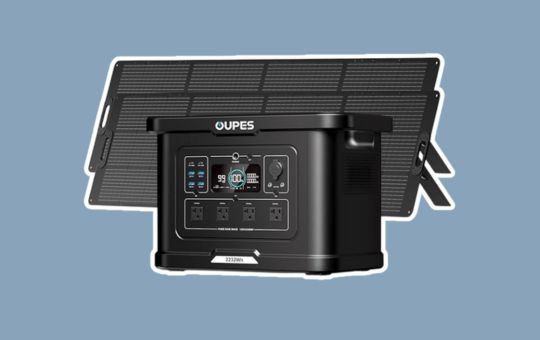
The OUPES Exodus 2400 is the kind of power station that feels like it was made for people who take preparedness seriously. With 2,400W of output and a 2,232Wh battery, the Exodus is built to handle more than just small gadgets. It can run full-size appliances like fridges and power tools. For people living the off-grid life, or just those tired of unreliable power at home.
The standout? For many, it’s the smooth, quiet integration of a UPS (uninterruptible power supply). The Exodus kicks in almost instantly when the power drops, helping protect sensitive devices. That kind of reliability, especially when paired with a solar charging option, makes this generator feel less like a camping toy and more like a long-term backup plan.
It’s not the lightest thing out there. Portability is a real tradeoff. At nearly 100 pounds with the two panels included, you’re not tossing it in the backseat at the last minute. Some users have gotten around this with wheeled carts or by setting it up as a semi-permanent station. But this might not be the one if you’re looking for something to move around in often.
✅ Pros
- Substantial capacity: 2,400W output / 2,232Wh battery handles full-size appliances
- Comes with 2 x 240W solar panels: better-than-average solar charging speeds
- UPS functionality: according to users, it seamlessly keeps power going during outages
- App control: lets you monitor and manage things remotely
⚠️ Cons
- Heavy: At nearly 80 lbs with panels, it’s not ideal for frequent moving
- Pricey: Quality and power don’t come cheap, though most feel it’s worth the cost
Earthava’s Take: The OUPES Exodus 2400 does what it promises, reliably. After digging into dozens of reviews, specs, and demos, the feeling is clear: people trust this unit to deliver when it matters.
7. ECOFLOW Portable Solar Power Generator
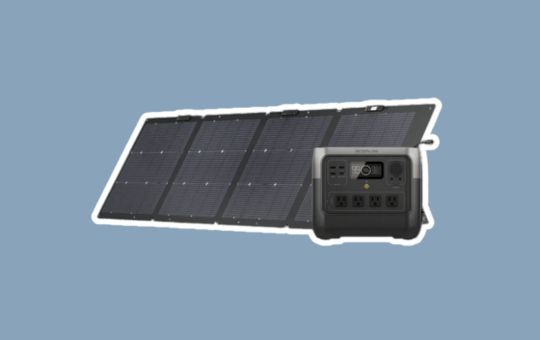
The EcoFlow RIVER 2 Pro bundled with the 220W bifacial solar panel is one of those compact setups that doesn’t try to do everything.
The RIVER 2 Pro is a 768Wh LiFePO4 portable power station with a 1600W surge output and enough versatility to handle everything from small appliances to basic tech. It’s part of EcoFlow’s newer generation of lightweight solar gear, and what it’s best known for is how quickly it recharges. Whether you’re using solar, wall AC, or even your car, this thing fills up fast. It’s one of the few units in this range that can go from zero to full in just over an hour using an AC outlet, which, for those keeping track, is faster than most people make dinner.
What makes that more impressive is the battery chemistry. LiFePO4, a favorite in high-end solar gear right now, offers more charge cycles, better thermal stability, and fewer worries in extreme temperatures. It’s safer and longer-lasting than traditional lithium-ion, and the RIVER 2 Pro includes this tech without inflating the price beyond reason. According to EcoFlow, you’ll get up to 10 years of daily use before the battery dips below 80% capacity. That matters if you’re planning to rely on it long-term, not just store it in a closet for emergencies.
The bundled 220W solar panel is also worth mentioning. It’s bifacial, meaning it collects light from both sides, and users say that actually makes a difference, especially when the ground reflects light well (snowy or light-colored surfaces, for instance). The panel folds neatly, feels sturdy, and connects easily to the RIVER 2 Pro. Real-world charge times vary, but most users report 4 to 6 hours in good sunlight, which is more than acceptable for this capacity.
It’s not built for heavy-duty appliance loads. A blender, a fan, a laptop, yes. But if you’re trying to run a full-size fridge or a heater, it’s going to hit its limit fast. Several reviewers noted that while it handled their devices well, it wasn’t made for overnight, high-draw situations. So, while it shines in portability and charge speed, it’s not your whole-home backup solution.
✅ Pros
- Ultra-fast AC charging (0–100% in ~70 minutes, based on reviews)
- Lightweight and compact: easy to carry or store
- Durable LiFePO4 battery chemistry with long lifespan
- App control via Bluetooth and Wi-Fi adds modern convenience
- Bifacial 220W panel offers strong solar input, even in mixed conditions
- Quiet, fume-free, and safe for indoor use
⚠️ Cons
- Not made for high-wattage devices or extended appliance use
- No 30A RV port, better suited for small setups or car camping
- Solar charging can be slower on cloudy days, even with a bifacial panel
Earthava’s Take: The EcoFlow RIVER 2 Pro with 220W solar panel feels like a thoughtful piece of gear. Not oversized. Not overpriced. Just well-tuned to what most people actually need when the power goes out, or the trail gets long. It charges fast, holds steady, and doesn’t make a fuss. And in the world of solar, that kind of quiet reliability, paired with a genuinely fast recharge time, earns respect.
8. Anker Portable Solar Generator + 100W Solar Panel
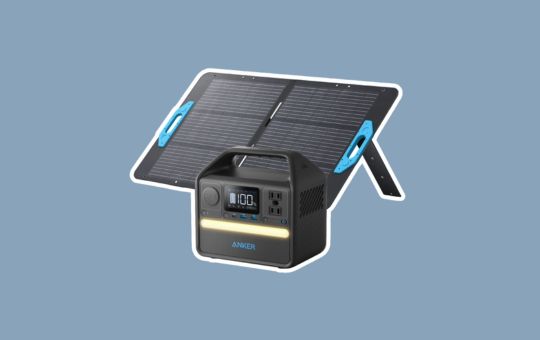
Anker 521 Solar Generator doesn’t try to be the biggest, the most powerful, or the flashiest option in the portable solar world, but it might be one of the most practical picks for people who just want something that works. And works quietly, safely, and without too many buttons to press.
This setup includes the Anker 521 PowerHouse, a compact 256Wh LiFePO4 power station, bundled with a 100W foldable solar panel. It’s best known for its reliability as a small-scale, everyday backup power source. It’s the kind of unit that makes sense for a cabin shelf, a car trunk, or a drawer in the house where you keep candles and flashlights “just in case.”
What stands out most in our research isn’t its wattage or capacity; it’s the balance of build quality and battery chemistry. The Anker 521 is made with LiFePO4 cells, which means it’s safer, longer-lasting, and more stable than many similarly sized competitors still using standard lithium-ion. It’s rated for over 3,000 charge cycles before dropping to 80% capacity, a number that gives this little generator a surprisingly long life for its size.
The solar panel is no slouch, either. At 100W, it’s a good fit for the 256Wh station and folds down easily for storage. The panel is durable, well-built, and easy to angle toward the sun thanks to its adjustable kickstand. In ideal conditions, users report a full recharge in around 4.5 to 6 hours, which is more than reasonable for casual use. And yes, it’s waterproof enough to handle some light rain, which matters if you’re using it outdoors and clouds roll in.
Still, there’s no getting around the fact that this setup has limitations. With a 200W output cap (and 600W surge), the Anker 521 won’t run power tools or larger appliances. It’s perfect for phones, tablets, fans, LED lights, and even laptops, but if you’re looking for true off-grid cooking or full backup in a blackout, this isn’t your match. It’s a grab-and-go kind of unit. Light, efficient, but not made for heavy lifting.
✅ Pros
- Long-lasting LiFePO4 battery with 3,000+ cycles
- Compact and lightweight, easy to carry or store
- Fast USB-C PD (60W) and multiple output options
- Solar panel folds flat, feels durable, and works reliably in direct sun
- Quiet and safe for indoor use, no fumes, no noise
- Clear screen and simple controls
⚠️ Cons
- Low capacity (256Wh) limits use to smaller devices
- No AC passthrough or UPS functionality
- Solar charging slows in overcast weather
Earthava’s Take: The Anker 521 Solar Generator is small, sturdy, and designed with care, using better battery tech than most options in its size class. If you’re not trying to run your whole house or power an RV, but you want something that just quietly gets the job done when you need it… this is a thoughtful little companion to have nearby.
9. MARBERO 88Wh Portable Power Station
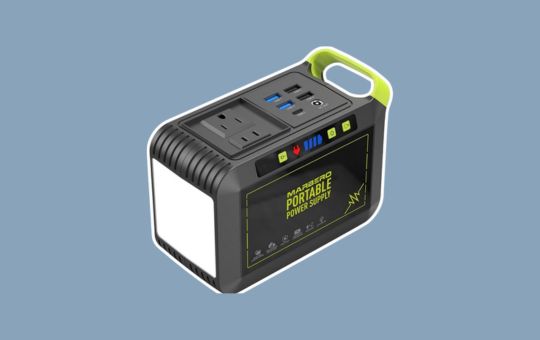
The MARBERO 88Wh Portable Power Station isn’t built to run your fridge through a storm, but for quick, quiet backup when the lights go out, or for keeping phones, lights, and small devices charged during a camping trip, it’s one of the more accessible little power banks on the market. It’s best known for its ease of use, compact size, and surprisingly decent range of ports for the price.
Portability, this is where MARBERO quietly shines. It weighs under 3 lbs and is small enough to toss into a backpack. Campers, van lifers, and even parents planning long car rides have mentioned how reassuring it feels to have a reliable battery on hand without lugging around a heavy brick. There’s no steep learning curve either; most people plug in their device and go.
Don’t expect high output. The 120W peak (with an 80W rated output) makes it very clear this is for low-power gear only. Laptops, smartphones, cameras, mini-fans, LED lights, maybe a small CPAP with low wattage. But not a coffee maker, space heater, or even some larger tablets, so it’s worth repeating: this is a mini power station for mini needs.
If you’re looking for a power solution to throw in the car for emergencies, keep on hand for blackouts, or bring on a minimalist camping trip, this is a good match. It’s especially popular among people living in small apartments where space is tight, or among those just dipping their toes into solar setups. It’s also frequently chosen by older users or those who want something lightweight and uncomplicated for powering hearing aids, phones, or lights during outages.
✅ Pros
- Ultra-light and compact: Easy to carry and store
- Versatile outputs: AC, USB-A, USB-C, and DC ports for small devices
- Simple setup: No apps or complicated settings
- Quiet and fume-free: Safe for indoor use
⚠️ Cons
- Low power output: Can’t support high-wattage devices
- Solar panel not included: Must be bought separately if you want off-grid charging
Earthava’s Take: The MARBERO 88Wh is a humble, well-loved little backup that people genuinely trust for the basics, and that alone makes it worth considering. As long as your expectations match its capacity, it delivers exactly what it promises: quiet, clean energy for small devices when it matters most.
10. GRECELL 300W Portable Power Station
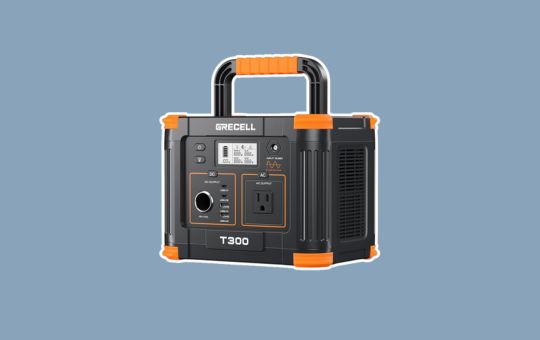
The GRECELL 300W Portable Power Station unit carries a 230.88Wh lithium battery and peaks at 600W, which means it’s not trying to compete with the heavy hitters that run refrigerators or AC units. Instead, it’s made to quietly support your phone, camera, laptop, or CPAP—devices you rely on when the lights go out or you’re off the grid. It’s light enough to move around without fuss and doesn’t overcomplicate things.
The standout feature is the 60W USB-C PD output. It’s not just about having USB-C—it’s the power delivery that gets real-world praise. Users say it charges laptops and tablets faster than older-style outputs, which makes this unit far more useful in a pinch than others in its size class.
But of course, this isn’t a perfect device. The one drawback that comes up often is the relatively slow solar charging speed. The GRECELL unit is technically solar generator compatible, but you’ll need to supply your own panel (and make sure it’s the right one). Even then, it takes several hours of strong sun to get a full charge. That’s not unusual in this category, but it’s worth knowing: if you’re counting on fast solar top-ups, this won’t be your best bet.
So, who’s this for? This power station really suits casual campers, car travelers, or folks in areas with occasional blackouts who just want a light, no-hassle backup. It’s also a good option for people who rely on CPAP machines at night, especially when paired with a car charger or wall outlet during the day.
✅ Pros
- Compact yet capable: 300W continuous, 600W peak
- USB-C PD output (60W) charges laptops and tablets faster
- Pure sine wave AC output for stable power
- Quiet, lightweight, easy to carry
⚠️ Cons
- Solar charging is slow, and the panel is not included
- Not suited for high-draw appliances
Earthava’s Take: This fills a gap between the ultra-minis and the bulky beasts, giving just enough power without overwhelming you with weight or complexity. If you need a solid, grab-and-go power station for light travel or basic home backup, the GRECELL 300W is worth considering. It won’t solve every problem, but for many people, it might solve just enough.
What Are Solar Generators and How Do They Work?
Solar generators are revolutionizing the way we think about power on the go, offering a sustainable alternative to traditional gas generators. We are witnessing a shift towards renewable energy sources, and portable solar generators are at the forefront of this movement.
The Components of a Solar Generator System
A solar generator system consists of several key components that work together to provide a reliable source of energy. These include photovoltaic solar panels that capture the sun’s energy, a charge controller that regulates the incoming power, battery storage typically using lithium-ion or LiFePO4 batteries, and an inverter that converts DC power to AC power for standard devices.
The Energy Conversion Process Explained
The energy conversion process begins when sunlight hits the solar panels, creating DC electricity that flows through the charge controller to prevent overcharging the battery. The stored energy in the batteries is then converted from DC to AC through the inverter, allowing us to run standard household appliances and electronic devices from a power station.
Why Choose Solar Generators for Off-Grid Adventures
For those who crave adventure without compromising on sustainability, solar generators offer a game-changing solution for off-grid power needs. As we explore the benefits of these innovative devices, it becomes clear that they are not just a convenient option but a critical component of modern outdoor excursions.
Environmental Benefits: Clean and Renewable Energy
Portable solar generators use solar power, a renewable and clean source of energy, to generate electricity. This not only reduces our dependence on fossil fuels but also minimizes environmental impact by producing zero emissions during operation.
Economic Advantages: No Fuel Costs and Low Maintenance
The economic benefits of solar generators are substantial. By eliminating fuel costs and reducing maintenance needs, these generators provide a cost-effective solution for off-grid power, making them an attractive option for frequent adventurers.
Practical Benefits: Silent Operation and Portability
The practical advantages of portable solar generators extend to their silent operation and portability. These features make them ideal for camping trips and other outdoor activities where noise needs to be minimized and ease of transport is required.
| Benefits | Portable Solar Generators | Traditional Gas Generators |
|---|---|---|
| Environmental Impact | Zero emissions, renewable energy | Emissions, fossil fuel dependency |
| Operating Costs | No fuel costs, low maintenance | Fuel costs, higher maintenance |
| Noise Level | Silent operation | Noise pollution |
Features to Look for in Portable Solar Generators
For those embracing the off-grid lifestyle, understanding the features of solar generators is vital. When selecting a solar generator, several key factors come into play to make sure it meets your specific power requirements and usage conditions.
The battery capacity and type are fundamental considerations. Measured in watt-hours (Wh), battery capacity determines how much energy your generator can store.
Battery Capacity and Type: Understanding Watt-Hours and LiFePO4
LiFePO4 batteries, like those used in BLUETTI solar generators, offer up to 4000+ cycles, outlasting standard lithium-ion batteries. This longevity, combined with their safety features, makes them a preferred choice for off-grid power needs.
Power Output: AC, DC, and USB Capabilities
The power output capabilities of your solar generator should match your intended devices. Higher wattage outputs are necessary for power-hungry appliances, while multiple port options, including AC outlets, DC ports, USB-A, and USB-C, provide versatility for charging various devices.
Charging Options: Solar, Wall, and Car Charging
Charging flexibility is required for extended trips. The best solar generators offer multiple input options, including solar panels, wall outlets for pre-trip charging, and car charging for on-the-go power replenishment. Some solar generator brands support fast charging and can be charged using solar energy, car chargers, and AC wall output, ensuring you’re never left without power.
Build Quality: Durability and Weather Resistance
Finally, the build quality and weather resistance of your solar generator are necessary for outdoor use. Features like robust casings, dust protection, temperature management systems, and water resistance ratings guarantee reliability in various environmental conditions, making them durable companions for your off-grid adventures.
Assessing Your Power Needs Before Purchase
Understanding your energy requirements is necessary when selecting a solar generator. We need to accurately assess our power needs to confirm we choose a model that meets our specific requirements.
Calculating Daily Energy Requirements for Your Devices
To calculate your daily energy needs, start by listing all the devices you plan to power, noting their wattage requirements, and estimating daily usage hours. This will help you determine your total daily energy consumption in watt-hours. Common devices include smartphones (5-10Wh per charge), laptops (45-100Wh per charge), and portable refrigerators (480-960Wh per day).
| Device | Wattage (Wh) | Daily Usage (hours) | Total Daily Energy (Wh) |
|---|---|---|---|
| Smartphone | 5-10 | 2 | 10-20 |
| Laptop | 45-100 | 4 | 180-400 |
| Portable Refrigerator | 480-960 | 24 | 480-960 |
Matching Generator Capacity to Trip Duration and Activities
Consider the duration of your trips and access to recharging opportunities when selecting a portable solar generator. Longer excursions with limited solar charging potential require larger battery capacity or additional solar panels. Factor in a 20% buffer capacity to account for battery inefficiencies and unexpected power needs.
By accurately assessing your power needs and matching your generator capacity to your trip duration and activities, you can secure a reliable and efficient power supply for your off-grid adventures.
Best Compact Portable Solar Generators for Weekend Trips
The best compact portable solar generators offer a great balance between power capacity and portability for weekend adventures. For weekend warriors and short outdoor excursions, these generators provide the perfect blend of power and convenience.
Compact portable solar generators are designed to be lightweight and easy to carry, making them ideal for camping trips, RV outings, or any short adventure. Two standout models in this category are the Jackery Solar Generator 300 Plus and the BLUETTI AC2A.
Choosing the Right Solar Panels for Maximum Efficiency
When venturing into the world of portable solar generators, selecting the right solar panels is important for maximizing efficiency and performance. The type, wattage, and design of solar panels impact charging speed and overall power generation.
Monocrystalline vs. Polycrystalline: Performance Differences
Monocrystalline solar panels stand out for their superior efficiency, typically ranging from 20-25%, and their better performance in low-light conditions compared to polycrystalline panels, which have an efficiency of 15-17%. Although monocrystalline panels are more expensive, their advantages make them a preferred choice for portable solar generators.
Portable vs. Fixed Solar Panels: Mobility Considerations
The design of solar panels plays a role in their application. Portable solar panels are designed for travel, featuring foldable designs with integrated kickstands for optimal sun positioning, weatherproof construction, and protective cases. In contrast, fixed panels offer higher capacity but compromise on mobility.
When choosing solar panels, it’s important to confirm compatibility with your specific generator model. Check the connector types, voltage ratings, and the maximum solar input your generator can handle to prevent potential damage to the charge controller.
- Efficient Charging: The wattage rating of solar panels directly affects charging speed. A higher-wattage panel charges your generator faster, though it may be larger and heavier.
- Compatibility: Make sure that your solar panels are compatible with your generator to maximize efficiency and prevent damage.
- Portability: Consider the design and weight of the solar panels, especially if you plan to use them for travel or off-grid adventures.
Optimizing Your Portable Solar Generator Setup
Maximizing the efficiency of your portable solar generator requires careful setup and planning. To achieve optimal performance, it’s important to consider both the placement of your solar panels and the safety of your connections and power distribution.
Strategic Panel Placement
Position your solar panels to receive direct sunlight for the longest duration possible. Confirm they are clear of obstructions like trees and buildings. Tilt your panels between 30 and 45 degrees for optimal year-round energy collection. Regular cleaning with water and a soft cloth will help maintain their efficiency.
Safe Connections and Power Distribution
When connecting multiple solar panels, understand the difference between series and parallel connections to stay within your charge controller’s specifications. Use appropriate gauge cables and install circuit breakers or fuses for safe power distribution.
| Connection Type | Effect on Voltage | Effect on Amperage |
|---|---|---|
| Series | Increases | Remains the same |
| Parallel | Remains the same | Increases |
Maintaining Your Solar Generator for Longevity
Maintaining your solar generator is key to maximizing its lifespan and performance. We understand that proper care can be daunting, but it’s necessary for ensuring your device continues to power efficiently.
By following some simple maintenance tips, you can extend the life of your solar generator. This includes proper battery care and regular maintenance of the solar panel.
Battery Care: Charging Cycles and Storage Best Practices
For battery care, it’s important to avoid completely depleting lithium batteries. Keeping them between 20% and 80% charge is ideal for longevity. Storage in cool, dry environments between 50-70°F when not in use is recommended.
- Avoid extreme temperatures.
- Perform a full charge cycle every 3-6 months during long-term storage.
- Maintain proper charging levels.
Solar Panel Maintenance: Cleaning and Protection Tips
Regular cleaning of solar panels with water and a soft cloth or sponge is necessary to remove dust, debris, and bird droppings. Inspect panels for microcracks or discoloration and protect them from physical damage during transport.
- Regularly check cables, connectors, and ports for signs of wear or damage.
- Replace any compromised components immediately to guarantee protection and safety.
Advanced Tips for Maximizing Solar Generator Efficiency
To get the most out of your solar generator, it’s important to understand the strategies that maximize its efficiency. By implementing these advanced tips, you can improve your off-grid experience.
Energy Conservation Strategies During Limited Sunlight
During periods of limited sunlight, prioritize energy conservation by using DC-powered devices directly and disconnecting phantom loads. Consider using power-efficient alternatives like LED lighting, which uses 75% less energy than incandescent bulbs.
Battery Extension Options for Extended Power Needs
For extended power needs, many premium solar generators offer battery extension capabilities. For example, the BLUETTI AC500 system can scale up to 33kWh with additional battery modules, providing reliable power during prolonged outages.
Comparing Portable Solar Generators to Traditional Gas Generators
As we explore sustainable energy options, comparing solar generators to traditional gas generators reveals substantial differences. This comparison is important for individuals seeking reliable power solutions for off-grid adventures or emergency backup power.
Environmental Impact and Sustainability Factors
Solar generators offer a cleaner, more sustainable alternative to traditional gas generators. The key differences lie in their environmental impact:
- Emissions: Solar generators produce zero direct emissions, while gas generators emit harmful pollutants.
- Noise Levels: Solar generators operate silently (0- 25 dB), whereas gas generators are much louder (50- 85 dB).
Cost Analysis: Initial Investment vs. Long-Term Savings
While the initial investment in solar generators ($300-$5,000+) is typically higher than that for gas generators ($300-$2,000), the long-term operational costs favor solar generators due to the absence of fuel expenses. A gas generator can consume $5-15 worth of fuel per day.
| Feature | Solar Generators | Gas/Fuel Generators |
|---|---|---|
| Power Source | Solar panels, wall outlets, and car adapters | Non-renewable fuels and gasoline |
| Noise Levels | Silent operation (0- 25 dB) | Loud combustion engine (50- 85 dB) |
| Maintenance | Low maintenance | High maintenance |
| Emissions | Zero emissions | Produces CO₂ and other emissions |
| Lifespan | 20-25 years with proper maintenance | Average lifespan is 10 years |
Conclusion: Powering Your Sustainable Off-Grid Lifestyle
Embracing solar generators revolutionizes off-grid living. We have explored various models, from compact to comprehensive power systems, that provide clean, reliable, and sustainable power. By choosing the right solar generator, you can enjoy sustainable off-grid adventures while reducing your environmental footprint.
FAQs About Solar Generators
The lifespan of a battery in a power station varies depending on the type and usage, but LiFePO4 batteries typically last around 10 years or 3000-5000 charge cycles.
Yes, some high-capacity power stations can be used to power homes during outages, but it’s necessary to assess your energy needs and choose a suitable model, such as those from Anker Solix.
Charging time depends on the power station’s capacity, solar panel output, and sunlight exposure. Generally, it can take anywhere from 2 to 8 hours to fully charge a power station using solar panels.
Many power stations are designed with weather resistance in mind, but it’s important to check the product’s specifications and IP rating to confirm it can withstand the elements.
Some power stations, like the BLUETTI AC500, offer modular designs that allow you to expand the capacity by adding more battery packs.
Power stations can charge a wide range of devices, from smartphones and laptops to refrigerators and power tools, depending on their capacity and output.
Regularly check and clean the solar panels, update the firmware, and store the power station in a cool, dry place when not in use to prolong its lifespan.
 Earthava is an environmental collective designed to turn awareness into impact. From deep dives into ecology to daily sustainable swaps, we provide the tools and intel you need to protect the ground you stand on.