
Your phone case isn’t just about protecting your device anymore. It’s also a chance to care for the planet. Every year, millions of plastic cases end up in landfills or oceans, adding to growing pollution.2 If you’ve been wondering how to protect your phone while helping the environment, you’re not alone.
Eco-friendly phone cases offer an easy way to make a difference. These cases are made from biodegradable materials and recycled components that reduce waste and carbon emissions.1 They are stylish, durable, and much better for our planet than traditional plastic options.
In this post, we’ll explore what eco-friendly phone cases are made of and why they matter. You’ll also learn about top brands and tips to pick the right one for your style and needs.
Ready? Let’s get started!
Key Takeaways
- Eco-friendly phone cases are made from biodegradable materials like bamboo and plant-based polymers. These break down in 6–12 months, reducing plastic waste and pollution. 1
- Recycled components, like fishing nets or old plastics, are repurposed into durable cases by brands like Popsicase. This helps lower landfill overflow and supports a circular economy. 2
- Top brands include Pela, CASETiFY, Earthava, and EcoBlvd. Pela has prevented over 313,528 pounds of plastic waste, while CASETiFY has recycled over 60,000 kg of plastic since 2023 through its programs. 16 18
- Certifications like Intertek confirm proper biodegradability standards for eco-friendly cases. ISO standards ensure high-quality production practices without harmful additives or microplastics left behind.3 9
- Earthava’s plant-based phone cases stand out with zero-plastic designs that decompose naturally. They also donate 1% of sales to climate projects and support girls’ education worldwide.10 20
What Are Eco-Friendly Phone Cases Made Of?
Eco-friendly phone cases use materials that break down naturally or come from recycled sources. They help lower waste and cut plastic pollution.
What Are Biodegradable Materials in Phone Cases?
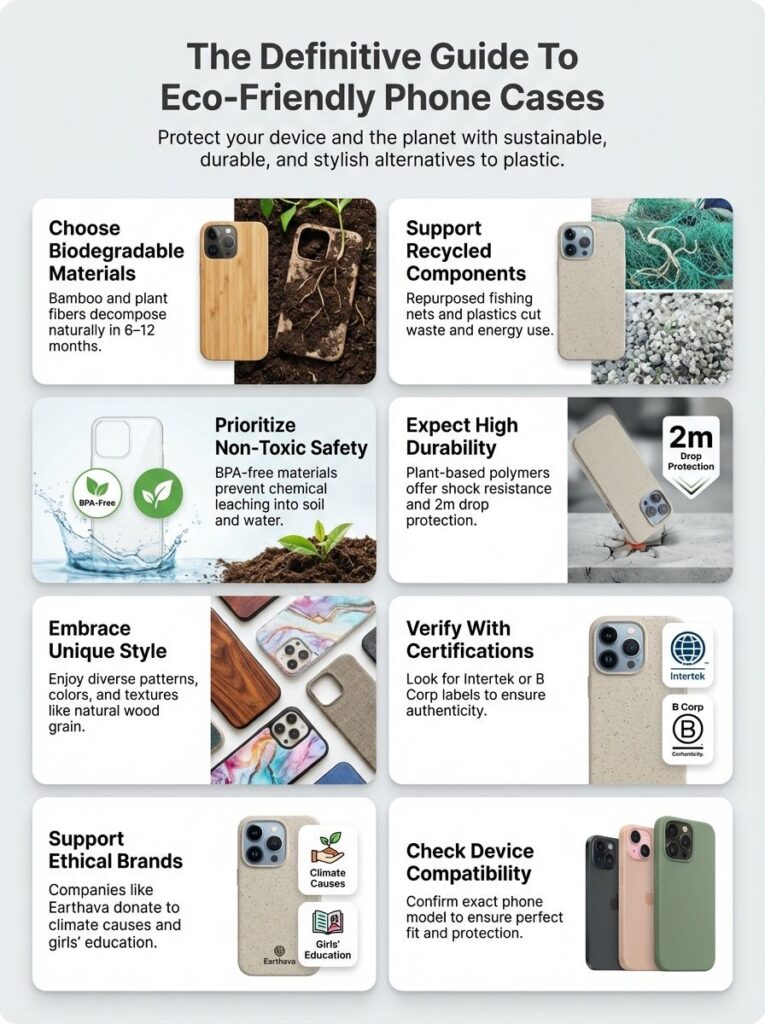
Biodegradable materials break down naturally without leaving harmful waste. For phone cases, these include bamboo fiber, plant-based polymers like cellulose or starch, and wheat straw.
These materials decompose faster than plastic in compost settings, often breaking down within 6 to 12 months in industrial conditions. 1 Unlike regular plastics that create microplastics, biodegradable options turn into organic matter.
For example, Pela cases are fully composted instead of polluting landfills.
Plant biopolymers mixed with flax shive add durability while staying eco-friendly. Compostable glues and linings further reduce a case’s environmental footprint. Bamboo-made cases can decompose in just 60-90 days under the right conditions. 1 Choosing such materials supports renewable resources and helps fight plastic pollution by promoting reuse or full decomposition over time.
How Do Recycled Components Help the Environment?
Recycled materials in phone cases cut down on plastic waste. 2 They reduce landfill overflow and keep trash like fishing nets or old plastics out of oceans. Popsicase, for example, turns used fishing nets into durable cellphone covers.
Using recycled components saves energy compared to making brand-new plastics. 2 This step helps shrink the carbon footprint tied to production.
Turning waste into new products also promotes a circular economy. Factory scraps and post-consumer plastics find new life instead of polluting the planet further. Brands like Pela mix recycled flax straw with sustainable materials, lowering both waste and carbon emissions.
These efforts help fight against rising plastic pollution while supporting cleaner ecosystems globally.
Why Is Non-Toxic Manufacturing Important?
Non-toxic manufacturing keeps harmful chemicals out of our products and environment. Many traditional phone cases use mixed plastics with dangerous additives that can leak into soil and water when thrown away.
By avoiding these substances, eco-friendly phone cases become safer for people and the planet. 3
BPA-free materials and environmentally safe adhesives reduce health risks during use. Brands like Earthava focus on plastic-free designs made entirely from natural elements or plant-based components.
This approach also reduces the risk of chemical exposure while making recycling easier. “A safer product means a cleaner future,” as many sustainable companies believe.
Why Choose Eco-Friendly Phone Cases?
Choosing eco-friendly phone cases isn’t just about protecting your device. It’s a step toward reducing waste and making greener choices every day.
How Do Eco-Friendly Cases Reduce Environmental Impact?
Eco-friendly phone cases lower plastic waste by using biodegradable materials like bamboo fiber and plant-based polymers. These materials break down much faster than standard plastics, causing less harm to the planet.
For example, Pela cases compost in under six months and have already stopped over 313,528 pounds of plastic from reaching landfills. 3
By recycling old materials such as fishing nets or used plastics, these cases reduce the need for new resources. Popsicase turns ocean trash into functional products, cutting pollution directly at its source.
Lower energy use during production also reduces carbon emissions and water waste. This means fewer natural resources are drained with every purchase made responsibly. 3
Are Eco-Friendly Cases More Durable?
Reducing environmental impact doesn’t mean compromising on durability. Cases like those from Pela offer up to 2m drop protection for phones such as the iPhone 15. Earthava’s designs enhance durability further, featuring shock-resistant attributes that surpass many standard bioplastic options.
Nimble cases provide greater strength, safeguarding against drops from heights of up to 3 meters and even including a two-year warranty.
Materials like plant-based polymers (hemp, flax, PLA) are strong yet flexible enough to handle everyday wear. Customer reviews also support their longevity. For instance, Pela’s biodegradable phone cases have received excellent feedback for withstanding accidental falls and regular use while staying intact.
These eco-friendly materials are not only long-lasting but also decompose responsibly after their purpose is served—leaving no waste behind! 4
Can Eco-Friendly Cases Be Stylish and Unique?
Eco-friendly phone cases are proof that sustainable materials and stylish designs go hand in hand. With options like floral prints, abstract patterns, and retro themes, they cater to every taste.
Trending choices include Pela’s Mushroom Party or Festive Trees designs. Wooden cases stand out with their natural grain patterns that make each case one-of-a-kind. 5
Brands often team up with artists for exclusive collections. Customization is also a big hit; Pela lets you design your own compostable phone case.
Colors range widely from subtle beige tones to bold reds and blues. These cases aren’t just functional but double as conversation starters, too! Now let’s explore the key materials behind these eco-friendly options.
Key Materials Used in Eco-Friendly Phone Cases
Eco-friendly phone cases use clever materials to protect your phone and the planet—read on to learn what makes them stand out.
What Are the Benefits of Bamboo Cases?
Bamboo cases break down naturally, taking only 60–90 days in compost or landfills. This reduces plastic waste and carbon emissions. 6 Bamboo is a renewable material that regrows quickly, making it a sustainable choice for durable phone cases.
Each bamboo case has a unique grain pattern, adding natural style to your device. 6 They are lightweight yet strong enough to protect your phone from drops. These cases are also free of harmful chemicals and plastics, aligning with zero-waste living.
What Makes Plant-Based Polymers Eco-Friendly?
Plant-based polymers come from renewable materials like wheat straw, starch, or cellulose. These natural resources need less water and energy to make compared to traditional plastic.
That means lower carbon emissions during production. 7
These polymers break down in compost within 6–12 months, leaving no harmful waste behind. Unlike regular plastics, they release no microplastics as they degrade. Companies like Pela use flax shives and biopolymers for added strength while keeping them eco-friendly.
Materials such as those in WAVECASE lower environmental impact even further by being fully biodegradable phone cases. 8
How Is Recycled Plastic Used in Phone Cases?
Recycled plastic brings renewed purpose to phone cases. Companies like Popsicase transform discarded fishing nets into durable, sustainable covers. 3 Nimble repurposes old compact discs and three types of plastics to create eco-friendly designs.
Their transparent circular cases also utilize recycled materials, combining style with sustainability.
These cases significantly reduce waste while promoting a circular economy. By turning trash into functional mobile gear, brands help lower plastic pollution and carbon emissions. Choices like Nimble’s AirPods covers incorporate recycled silicone in shades like Olive Green or Sea Blue, proving that eco-conscious options can be fashionable as well!
Earthava Phone Cases — Brand Overview & First-Hand Experience

Earthava combines natural materials and smart design to create eco-friendly phone cases. These cases stand out for their sustainability, durability, and stylish appeal.
Why Earthava created its cases
Plastic waste harms the planet. Earthava wanted a solution. They created biodegradable phone cases to fight plastic pollution. Their products use plant polymers and bamboo binders, leaving out all plastic content. 9
The goal is more than reducing waste. Each case helps cut carbon emissions and promotes responsible choices. By committing 1% of every purchase to climate programs, they address global warming directly. 10
Materials used & why chosen
Earthava cases use biodegradable plant polymers blended with bamboo binders. These materials were picked because they break down quickly and naturally, causing no long-term waste. 11 The inks are water-based, ensuring the entire case can return to the earth without harm.
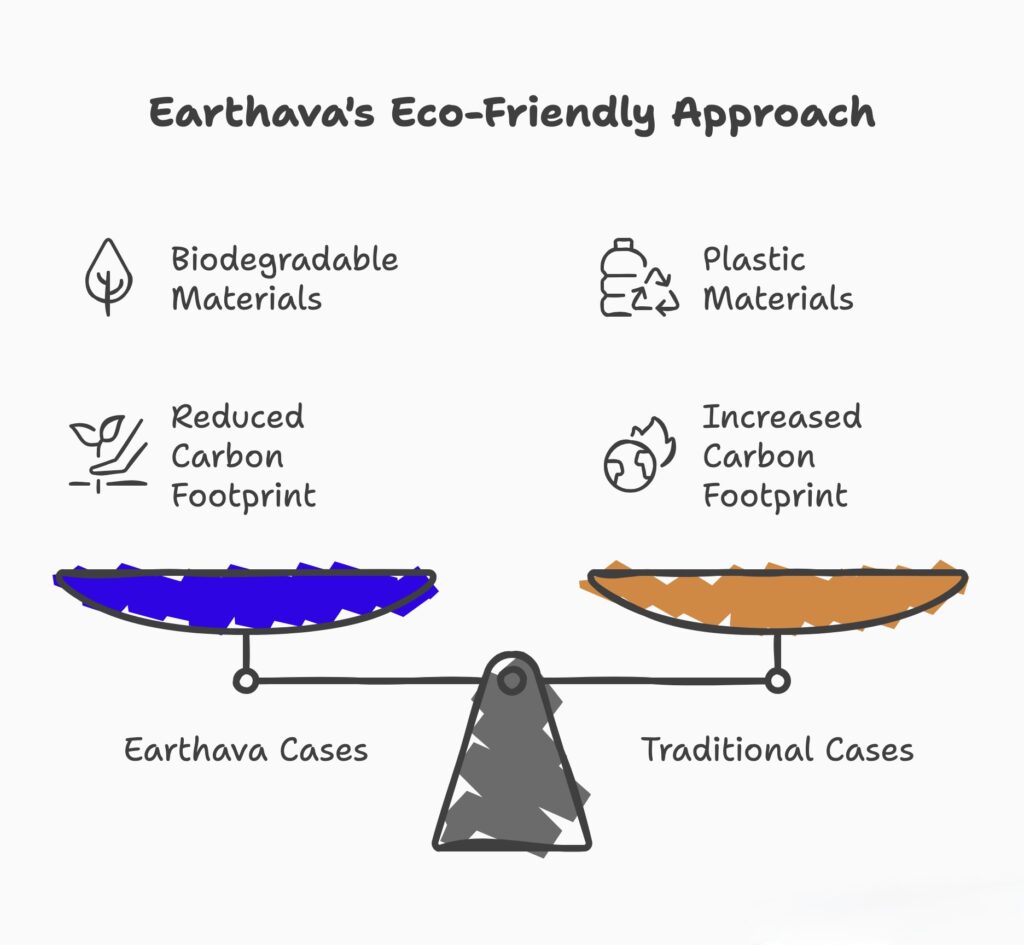 The packaging is recyclable, reducing carbon emissions during production. Earthava opted for this plastic-free approach to combat plastic pollution while lowering its carbon footprint.
These choices reflect a strong focus on sustainability and environmental responsibility.
Next, discover how durability was researched and tested by Earthava!
How durability was researched/tested
Design choices focused on making products last longer. Researchers studied 109 articles from trusted databases like Scopus and Web of Science. 12 They also checked 85 additional references.
Consumer demand for tougher cases shaped the development process. Studies showed customers want protection, not just replacements. 12
The cases faced tests for wear and tear in daily use. Shock-resistance was a key feature to protect phones better than typical bioplastic cases. Long-term decomposition rates were measured, too.
This kept a balance between durability during use and biodegradability after disposal. These efforts ensured strong, sustainable phone cases ready for real-world needs without harming the planet later on. 10
The feel, protection, and aesthetics
Earthava cases hug your phone snugly, offering a slim-fit feel that’s smooth and lightweight. The natural textures provide an earthy vibe while staying professional or casual when needed.
Their organic finishes add charm without extra bulk, making everyday use comfortable and practical.
These sustainable phone cases don’t skimp on protection either. They handle drops like champs, keeping your device safe from cracks or scratches. Available in vibrant colors with minimalist designs, they turn heads as conversation starters while meeting compostable material goals for eco-conscious users. 10
Next comes what reviewers love about these cases: style, sustainability, and dependability. 13
What reviewers mention most: protection, style, sustainability
The cases provide strong protection against drops and bumps. Many reviewers praise the sturdy, high-quality construction. They note that their phones stayed safe even after accidental falls.
Users find this reliability crucial for everyday use. 14
Style is another big highlight. Customers love the modern designs. These phone cases are not just functional but also attractive, blending eco-friendly materials with sleek aesthetics.
Sustainability tops it all, as buyers appreciate the plastic-free packaging and commitment to reducing carbon emissions. Supporting external causes like carbon offsetting further solidifies its positive impact on both fashion and ethics.
How Earthava cases differ from typical bioplastic cases
Earthava cases stand out by using pure plant-based fibers and natural materials. 15 Many bioplastic cases sneak in plastic fillers, but Earthava avoids them completely. This means no microplastics are left behind after decomposition.
Their design ensures rapid biodegradation, faster than most standard bioplastics.
They also offer better shock resistance compared to other biodegradable phone cases. This balance of durability and eco-friendliness makes them unique. Each case is Intertek certified for safety and proper biodegradability, proving their environmental commitment isn’t just a claim.
Intertek certification
Intertek certification proves these phone cases are biodegradable. It confirms they decompose naturally without leaving harmful waste. This ensures they meet global compostability standards like ASTM D6400.
The tests also check for non-toxic materials and no harmful chemicals. Third-party validation supports claims of using sustainable materials, offering a truly eco-friendly option. 9
Subtle brand story
Earthava began with a simple goal: cutting down plastic waste. 11 The team wanted to make phone cases that were both stylish and sustainable. They focused on using natural materials like bamboo fiber and biodegradable plastics.
Every case reflects their promise of being eco-friendly, from production to packaging.
The brand also supports larger environmental causes. Customer feedback plays a big role in improving designs and creating durable phone cases. Unlike most bioplastic options, Earthava’s products stand out for balancing protection, aesthetics, and sustainability effortlessly.
Top Brands Offering Eco-Friendly Phone Cases
Some brands are making stylish and green phone cases that stand out. Each one offers something different, from eco-friendly materials to bold designs.
How Does Pela Promote Sustainability?
Pela reduces plastic pollution with compostable phone cases. Their cases break down in under six months, leaving no waste behind. 16 They use Flaxstic, a material made with 45% plant-based content and renewable materials.
This approach cuts carbon emissions while offering strong durability. 17
The company has prevented over 313,528 pounds of plastic from entering landfills so far. 16 Over 80% of their products are locally made in Kelowna, Canada, reducing the need for long transports and lowering the carbon footprint further.
Pela’s B Corp certification ensures ethical production practices throughout.
What Innovations Does CASETiFY Bring?
CASETiFY’s “Re/CASETiFY” program has recycled over 60,000 kg of plastic waste since 2023. 18 It collects old cases and works with recyclers to turn them into new ones. This reduces plastic pollution while cutting down carbon emissions.
The company also focuses on personalization. Customers can design cases using their Instagram photos, creating a unique style. 18 CASETiFY partners with artists and famous brands for special collaborations, too.
Their ISO-certified production guarantees high-quality materials in each case. By selling directly to consumers online first, they offer better prices and faster updates based on feedback.
What Eco-Friendly Options Does EcoBlvd Provide?
EcoBlvd offers phone cases made entirely from plant-based materials or recycled plastic. Their biodegradable options fully break down in under six months, leaving behind only CO₂, water, and biomass. 19 These compostable phone cases decompose without harmful residue, making them safe for the planet.
Recycled plastic cases use post-consumer waste to cut down on new plastic production. EcoBlvd also provides 100% plastic-free packaging alongside their products. A portion of each purchase supports conservation nonprofits, showing their commitment to sustainability.
Why is Earthava the best option?
Earthava makes phone cases that are 100% biodegradable and recyclable. 20 These cases break down naturally without leaving toxic waste, making them perfect for reducing plastic pollution.
They contain no plastic at all and are certified, so they help cut your carbon footprint with ease.
The company stands out by donating 1% of every sale to carbon offset projects. 20 Their slim, stylish designs balance sustainability with protection. Prices start at $45, reflecting their premium quality and ethical focus.
How to Choose the Right Eco-Friendly Phone Case
Picking the perfect eco-friendly phone case is simple—match your needs, confirm its claims, and let your style shine!
How to Check Device Compatibility?
Finding the right eco-friendly phone case is important. It must fit your device perfectly for protection and style.
- Confirm your phone model. Check the settings menu of your mobile phone. Go to “About Phone” or “General” options to find the exact model name and number, like iPhone 14 or Samsung S22 Ultra. 22
- Look at the product details online or in-store. Reliable brands list supported models on their packaging or product page. Popular examples include compatibility for iPhone models (6 through 17) and Samsung phones.
- Use filters when shopping online. Many stores let you sort by device type, color, pattern, or case material, making it easier to choose sustainable materials like bamboo fiber or plant-based polymers.
- Read customer reviews for fit issues. Buyers often share if a compostable case has a snug fit or causes problems with wireless charging compatibility.
- Contact customer support if unsure. Major eco-friendly brands offer help through chat, email, or call services to confirm if an option works for your exact mobile device.
- Check certifications listed by manufacturers. Some cases highlight credentials such as Intertek testing for quality standards or zero-waste practices used in production.
- Avoid buying without clear size information to reduce returns and plastic pollution caused by shipping products back and forth unnecessarily.
Finding great eco-friendly cases doesn’t stop at compatibility; protecting both your phone and the planet goes hand-in-hand! 22
What Certifications and Claims Should You Trust?
Look for certifications like B Corp to confirm strong social and environmental practices. Third-party certifications, such as Intertek, prove compostable phone cases break down within a year in proper compost environments. 3 For recycled materials, UL certification guarantees the authenticity of reused content.
Check ISO certificates to ensure consistent quality during production. Avoid greenwashing by choosing brands with clear transparency on claims. Trust companies that provide proof of their carbon footprint reduction efforts or offer certified climate-neutral products.
Reliable labels protect both your trust and the planet.
How to Pick a Design That Fits Your Style?
Selecting the right phone case design can make all the difference. Many brands offer custom options, letting you create a case that feels personal. Bold prints like retro patterns or floral themes are popular choices.
Minimalists might prefer solid colors like beige or black for simplicity. Artistic collaborations.
Trendy shades like red, green, and yellow suit various tastes. Some cases even feature watercolor artwork for an elegant touch. Influencers often showcase new designs on social media platforms, helping users discover fresh styles easily.
Personalization ensures longer use by matching your style while promoting sustainability goals, too!
Conclusion
Choosing eco-friendly phone cases is a small step with a big impact. They help reduce waste, cut plastic pollution, and lower carbon footprints. These cases are practical, stylish, and tough enough to protect your device.
Ready to switch? Pick a case that matches your style and helps the planet today!
FAQs
1. What makes eco-friendly phone cases better for the planet?
Eco-friendly phone cases are made from sustainable materials like bamboo fiber, compostable materials, or recycled plastics. They help reduce plastic pollution and lower carbon emissions compared to traditional options.
2. Are compostable phone cases durable enough for daily use?
Yes, many compostable phone cases are designed to be durable while still breaking down naturally over time. They protect your phone without harming the environment when disposed of properly.
3. How do biodegradable phone cases differ from regular ones?
Biodegradable phone cases break down into natural materials like soil or water under certain conditions. Regular ones often contain non-biodegradable plastics that contribute to long-term waste.
4. Can I find stylish, eco-friendly phone cases with plastic-free packaging?
Absolutely! Many brands offer stylish designs using renewable materials and ship them in plastic-free packaging, often with water-based inks for added sustainability.
5. Do eco-friendly options work with wireless charging or accessories like PopSockets?
Yes, most sustainable and climate-neutral options are compatible with wireless charging and can support accessories like PopSockets without compromising functionality or style!
References
- https://harperandblake.co.uk/blogs/news/what-are-eco-friendly-phone-cases-and-why-should-you-buy-one?srsltid=AfmBOoqipAWnGLhsGDGGG0cV8WPQT7itfHh4xclUX62QBEJJNdmxrtkJ (2021-09-24)
- https://www.agood.com/blogs/stories/the-rise-of-eco-friendly-phone-cases?srsltid=AfmBOopBzgOFJsEqVN3oAfvqJe5NXTiIYrBmfdlyuCT1guL8S_B9uhk- (2023-05-18)
- https://www.compareandrecycle.co.uk/blog/guide-to-eco-friendly-phone-cases (2025-11-17)
- https://www.agood.com/blogs/stories/eco-friendly-phone-cases?srsltid=AfmBOorUShCktwOuzTr71nAmUv1VM0nMFSlRtrOLMQ7FDuf90nb8UHg3 (2023-08-22)
- https://www.nextmsc.com/blogs/eco-friendly-phone-cases-a-smarter-greener-choice (2025-09-10)
- https://tallpinecases.com/blogs/news/why-bamboo-phone-cases-are-becoming-the-preferred-choice-for-eco-conscious-shoppers (2025-10-10)
- https://tallpinecases.com/blogs/news/eco-friendly-phone-cases-what-you-need-to-know-about-the-materials-used (2023-11-20)
- https://pmc.ncbi.nlm.nih.gov/articles/PMC2873018/
- https://www.earthava.com/
- https://www.earthava.com/lifecycle-eco-friendly-phone-case/ (2025-05-23)
- https://www.earthava.com/store/
- https://www.sciencedirect.com/science/article/pii/S2352550925000958
- https://www.agood.com/blogs/stories/the-rise-of-eco-friendly-phone-cases?srsltid=AfmBOooTnIYcaCRA8sS1tUhvRlvShaOIAlMKqMCnT1z0KbNoeyzIaZFz (2023-05-18)
- https://sustainably-chic.com/blog/sustainable-phone-cases/
- https://www.facebook.com/100069652785703/videos/looking-for-a-sustainable-phone-case-that-actually-protects-both-your-device-and/1789370955299726/
- https://pelacase.com/pages/pela-compared?srsltid=AfmBOoq2UoqLB-M8A-sX21KdmslMuPNJkKXDbQ1LSpD4ThcV-I7DwE4c
- https://pelacase.com/pages/sustainability-practices?srsltid=AfmBOooZuCui6ykeELqL1VcVqTtqXNjZwKOPNpQWDjwRiQJaTuuwTv3Y
- https://www.runsuncase.com/how-casetify-became-global-phone-case-brand/ (2025-10-13)
- https://www.ecoblvd.com/pages/making-the-case-against-waste?srsltid=AfmBOooXeVClW3WASQKes4b2a4d4pROPlF5zZXnGC4L2DNG1RsLrRo0_
- https://www.prlog.org/13058861-earthava-launches-stylish-eco-friendly-phone-casesbecause-sustainability-should-look-good-too.html (2025-01-27)
- https://www.earthava.com/best-eco-friendly-phone-cases/ (2025-08-10)
- https://tallpinecases.com/blogs/news/how-to-choose-the-right-eco-friendly-phone-case-for-your-lifestyle (2025-06-23)