
Watching a tiger pace the same six feet of concrete, over and over, that’s the image zoo critics point to. Watching a California condor population climb back from a few dozen birds to over 400, that’s the image zoo defenders point to. Are zoos ethical? Depends which image you’re standing in front of.
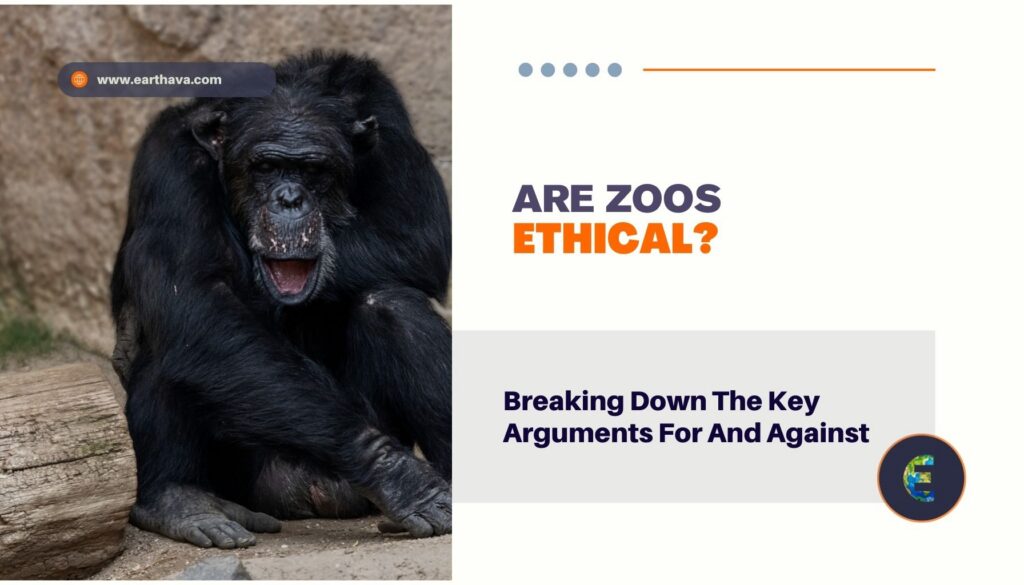
Both images are true at the same time, which is exactly why this question doesn’t have a clean answer. Zoos hold wild animals for display, breeding, research, and education, all four at once, and each of those roles pulls in a slightly different direction.
As of March 2026, 254 facilities across 12 countries carry AZA accreditation, 229 of them in the US. That’s a small fraction of the roughly 2,400 USDA-licensed exhibitors nationwide, and the gap between an accredited zoo and an unaccredited one is often the difference this whole debate is actually about.3
This piece weighs both sides against each other, the conservation wins and the welfare costs, so you can land on where you actually stand.
Key Benefits of Zoos for Endangered Species
At their best, zoos do more than put animals on display. if done right, they fund wildlife protection, run breeding programs with a real shot at reversing extinction, and push animal care forward through actual science, not just good intentions on a brochure.
We asked The COO OF Tanganyika Wildlife Park on her opnion as she spent the last 20 years of her life dedicating it to animal walfare “The most unethical thing we can do for endangered species is to make them invisible. says LynnLee Schmidt, COO & CMO at Tanganyika Wildlife Park, In my 20 years transitioning from zookeeper to COO, I’ve seen that humans simply don’t protect what they don’t know. Modern zoo ethics isn’t about keeping animals away from people; it’s about creating safe, respectful connections that turn a casual visitor into a lifelong steward.”
| What ethical zoos try to do | Why it matters to you as a visitor |
|---|---|
| Run conservation programs (fieldwork, anti-poaching support, habitat work) | Choose a zoo that supports wildlife conservation beyond the gates, not just a good-looking exhibit. |
| Manage breeding programs for threatened species | Ask whether births support a documented plan, or create surplus animals with nowhere to go. |
| Invest in welfare science (training, enrichment, nutrition, veterinary care) | Get a practical way to judge animal welfare, look for animals with choice, variety, and calm behavior. |
How do zoos contribute to conservation and breeding programs?
Money and staff, pointed at animals that would otherwise disappear. That’s conservation funding in its simplest form, and it’s the strongest argument zoos have. 1
The numbers back it up. AZA member facilities fund and staff more than 1,400 conservation projects worldwide, over 300 of them in North America alone between 1999 and 2000.3
In the most recent conservation snapshot AZA shared, reporting facilities put roughly $341.4 million toward conservation work across 130 countries, touching about 1,133 species and subspecies. Zoo Atlanta’s $17 million contribution to giant panda conservation is probably the single most cited example of what that funding looks like on the ground. 1
Two recovery stories make the abstract number concrete. The California condor fell to a few dozen birds in the 1980s. Reintroductions started in 1992. The population now sits above 400, built through captive breeding, careful release planning, and decades of zoos, agencies, and field partners working the same problem from different angles.
Black-footed ferrets tell a similar story, starting from just 18 animals captured in the 1980s, now maintaining roughly 280 in captive breeding facilities, with releases going out to Western reintroduction sites every year.
None of that happens without breeding programs doing the unglamorous work behind it. AZA-accredited facilities follow Species Survival Plans, structured breeding protocols built to keep genetic diversity wide enough that a species has a shot outside a fence someday, not just inside one.
Here’s the honest complication, a breeding program that works too well creates surplus animals, more individuals than there’s space or a release plan for.
What educational opportunities do zoos offer the public?
You’ve probably seen it happen, a kid pressed against the glass, not moving, just glancing. That moment is the whole bet zoos make on education, that watching turns into caring, turns into someone who actually does something later.
Over 209 million people walked through zoo gates in 2024.3 That’s a huge audience for a message about wildlife, way bigger than any single documentary or classroom unit gets. AZA’s latest education numbers back up the reach, over 45,000 teachers supported, 7.1 million people reached through K-12 field trips, outreach, and classroom resources.
Big numbers, sure, but they only mean something if the message actually sticks.
Does it really stick? A Conservation Biology study says yes, mostly, visitors who went to a zoo came away knowing more about conservation than they did going in. And it’s not just a one-off feeling in the moment either, plenty of guests remember specifics months later, and roughly a third say they walked away caring more about animal welfare and species preservation than they did before.
What that education actually looks like, day to day:
- keeper talks where staff explain diets and care routines.
- School partnerships tied to actual science standards, not just a fun field trip.
- Behind-the-scenes tours showing what wildlife rehab and vet care really involve.
- And the harder conversations too, plastic pollution, habitat loss, invasive species, the stuff that’s less cute than the animals but is kind of the point.
Museums lean on zoo partnerships for the same reason schools do. Live animals make abstract problems, poaching, habitat degradation, extinction, feel like something real instead of a paragraph in a textbook nobody remembers reading.4
How do zoos support scientific research advancements?
Not the sexiest word in this whole debate, “research,” but it might be doing more real work than anything else zoos do.
AZA-accredited facilities put over $26 million into research back in 2019,5 most of it aimed at animal care, health, and welfare, not just cataloging species for fun.
By the 2024 snapshot, that number had grown into $30.3 million spread across 1,839 projects, touching more than 650 species and subspecies, and producing 435 peer-reviewed papers.
That’s a real body of published science coming out of institutions people mostly think of as tourist attractions.
Break it down and it’s basically four buckets. Welfare tools, enrichment schedules, training plans, exhibit tweaks that cut down on stereotypic pacing.
Veterinary advances, better anesthesia, dentistry, geriatric care, disease prevention, stuff that started in a zoo clinic and now helps animals everywhere.
Field conservation support, genetics work, tracking tech, population monitoring for species that are barely hanging on in the wild.
And lastly, reintroduction prep, figuring out the nutrition and fitness and behavior training an animal actually needs before it gets released and has to survive without a keeper around.
Zoos also work directly with the U.S. Fish and Wildlife Service on rehab and rescue work, not as a side project but as an ongoing partnership. It’s the same infrastructure powering breeding recovery wins like the condor program, just pointed at the harder question of how to make animals ready for a world without fences.3
Do accredited zoos maintain high welfare standards?
One thing nobody tells you when they hand you an “accredited” badge: it’s not a one-time pass. It’s a test you have to keep taking.
AZA accreditation runs on a five-year cycle. Pass once, and a zoo still has to prove it’s meeting standards again, and again, every five years, or the badge comes off. That’s a meaningfully different system than a lot of people assume when they see the logo at the gate.
And most places don’t have that badge at all. Fewer than 10% of the roughly 2,400 USDA-licensed animal exhibitors in the country hold AZA accreditation.5 Legal, sure, every one of them. But “legal” is the floor, not the standard, and accreditation is where the actual bar sits higher, staffing, safety, long-term planning, not just the minimum a facility can get away with.
What accreditation actually requires: species-specific resource manuals, mandatory enrichment programs built around natural behavior, not just a toy tossed in a cage.
AZA also trains the USDA-APHIS inspectors who check on non-accredited facilities too, and lobbies for more APHIS funding so enforcement doesn’t stay toothless. There’s a do-not-breed policy for managing surplus animals responsibly, and a tracking system built specifically to stop transfers to substandard facilities or hunting operations. The Roadside Zoo Task Force writes model legislation aimed at shutting down the worst offenders entirely.6
So when you’re standing at a gate deciding whether to walk in, that badge is telling something real. Worth checking for it before buying the ticket, not after.
Major Ethical Concerns About Zoos
Good conservation numbers don’t erase the harder questions. They just sit next to them, uncomfortably, and both have to be dealt with at once.
The concerns mostly cluster into four spots: freedom, stress, whether an enclosure can ever really be enough, and whether money quietly bends decisions that should be about welfare. Marius the giraffe. Western lowland gorillas showing stereotypic behavior. AZA accreditation standards running headfirst into a facility’s bottom line.
How does captivity affect animal freedom and autonomy?
A zookeeper picks the diet. Picks the mate. Picks the daily route an animal walks, every single day, for its whole life. That’s what captivity actually removes, not just space, choice.
Marius, the giraffe killed at Copenhagen Zoo in 2014, is the case people still bring up a decade later. Tilikum, the orca who spent years in tanks before things went badly wrong, is the other one. Critics like David Hancocks point at both and argue captivity itself violates something more basic than welfare, autonomy, the ability to just be an animal without someone managing every hour of it.
Legally, the bar is lower than most people assume. The Animal Welfare Act sets minimums, handling, housing, feeding, sanitation, vet care, and a Congressional Research Service review notes it doesn’t even cover every animal category to begin with. Meeting the law and meeting your own ethical line are two different tests, and a lot of facilities only ever clear the first one.
Where you land here probably depends on what you’re weighing most. Care about autonomy specifically? You’ll judge wide-ranging species, big cats, bears, elephants, marine mammals, a lot harder than the rest. Care more about outcomes? You’re asking what a zoo does for wild populations outside the exhibit glass. Care about daily life? You’re watching for choice, enrichment, and whether an animal actually gets to be around others of its own kind, or not.
None of that makes the tradeoff disappear. Breeding programs genuinely help fight extinction. They can also produce more animals than there’s ever a real plan for.
What psychological and physical stresses do animals face in zoos?
Pacing. Same corner, same six steps, turn, repeat. If you’ve seen it, you know exactly what we mean, and it’s got a name, zoochosis, and it shows up faster than most visitors realize.
Boredom’s doing a lot of that damage. Limited space, not enough to do, natural behaviors with nowhere to go, so they turn into something else instead, repetitive, stuck. Breeding adds its own strain too, splitting up family groups and intergenerational bonds that would’ve stayed intact in the wild.1
Here’s a piece of actual good news, though. Welfare science has found things that work. Franklin Park Zoo ran husbandry training sessions with their African wild dogs, short ones, and pacing dropped right after training, measurably. Cleveland Metroparks Zoo tried something different with bears, a variable-time feeding setup that made them work for food, and exploratory behavior went up while abnormal behavior went down compared to baseline.
Not every stress is mental, either. Polar bears in enclosures that run too warm genuinely struggle, physically, not just behaviorally. Some species pack on weight fast when a facility can’t match what that animal would naturally eat or how far it would naturally travel to find it.
And enforcement’s weak enough that violations slide through more than they should. The Animal Welfare Act exists. Whether anyone’s actually checking on a given week is a separate question. AZA accreditation raises the floor somewhat, but it’s not universal, and where it’s missing, so is a lot of the oversight. 7
Why is it difficult for zoos to replicate natural habitats?
Try building a migration route inside a fence, sounds unrealistic…
Wide-ranging animals lose the most here, space to roam, distance to put between themselves and everything else, and that loss hits species already struggling the hardest, the ones conservation programs are trying hardest to save.
Two design fights keep showing up, over and over, at basically every zoo:
- Visitors want to see the animal. The animal might want to not be seen right now. Somebody has to lose that argument, and it’s usually not the visitor.
- A habitat can look exactly like a jungle and still be missing everything that actually matters, climbing routes, digging space, somewhere to graze, a way out if things get stressful.
Design usually bends toward what looks good through the glass, not what an animal actually needs to move through its day, and that choice shows up later in behavior and body condition, not just in a photo.4
There’s a quieter shift happening too, one most visitors never think about. Captive populations drift genetically over generations, sometimes epigenetically as well, so an animal born in captivity may just not be built the same way as its wild counterpart anymore. Not necessarily suited for release. That complicates the whole “we’re preparing this species for the wild” pitch in ways a lot of zoos don’t advertise.
Some controlled stress can actually build resilience, worth saying, it’s not all bad. But that’s a fine line to walk, and it takes real staff attention to keep it from tipping into something chronic instead of useful.
Are zoos prioritizing profit over animal welfare?
Ticket sales versus animal welfare. Every critic of zoos eventually lands on this exact tension, it’s a very fair argument to bring up.
Breeding programs are where this gets messy fastest. Sometimes a birth serves a real conservation plan. Sometimes it serves what draws a crowd, a baby animal in the exhibit, more visitors that weekend, more revenue. Hard to always tell which one you’re looking at from the other side of the glass.
El Paso Zoo actually lost its AZA accreditation in 2024, the reporting around it praised the zoo’s veterinary and welfare practices at the same time. The problem was deferred maintenance, the built environment, not how staff treated the animals. Good animal care and a well-run facility aren’t automatically the same thing, and that’s exactly why accreditation checks both.
Borth Wild Animal Kingdom. South Lakes Safari Zoo. Real abuse cases, not hypotheticals, and they’re a big part of why this whole debate carries the weight it does.
Accreditation helps here, some. It’s not a guarantee, not every zoo holds it, and holding it doesn’t erase every problem. Surplus animals are proof enough that breeding and conservation goals don’t always line up the way a mission statement claims they do.
At the end of the day, though, demand runs this industry. People keep buying tickets, zoos keep existing, and whatever balance gets struck between profit and welfare from here depends entirely on what visitors actually reward with their money.
How Can You Evaluate a Zoo’s Ethics?
To be fair, you don’t need a biology degree to figure this out. Mostly it comes down to whether you can actually verify what a zoo’s telling, or whether you’re just supposed to take their word for it.
Accreditation’s the first thing to check, AZA specifically. Welfare audits and habitat assessments too, if you can dig them up online, which isn’t always easy. Beyond that it’s just walking around and paying attention.
Ask about the breeding programs, ask what happens with wildlife rehab cases, and listen to how staff answer, some of them clearly know the animals, others are just repeating whatever they were told to say at orientation.
A few things worth checking specifically:
- Accreditation status, since it’s the quickest way to tell if outside oversight is even happening
- Whether animals actually have somewhere to get away from view, shade options, more than one space to move through
- What happens to animals once breeding programs produce more of them than there’s a plan for, that’s the part a lot of places don’t want to talk about
- Who the conservation money is actually going to, real partner names, not a general line about “supporting conservation”
- Whether staff sound like they know the animals individually or are reciting something memorized
What role do accreditation and standards compliance play?
Accreditation’s basically the paperwork behind “we checked, and it’s actually true.” Without it, you’re mostly trusting a website’s word for it.
AAZA’s is the one that shows up the most. As of March 2026 there are 254 accredited facilities across 12 countries, and fewer than 10% of the roughly 2,400 USDA-licensed exhibitors in the country hold it. Review happens every five years, not once and done, so a zoo can’t just pass in 2020 and coast on that forever.9
| Credential | What it usually signals | Best use for visitors |
|---|---|---|
| AZA accreditation | Five-year review cycle covering welfare, vet care, safety, education, conservation, governance | First filter, then still look closely at the actual enclosures |
| ZAA accreditation | A separate US accrediting body, 70+ member facilities | Useful context, then confirm welfare and conservation claims yourself |
| GFAS accreditation or verification | Sanctuary-focused standards meant to separate real sanctuaries from rescues that aren’t much better than what they claim to fix | Helpful if you’re comparing a zoo against a sanctuary model |
Visitors and funders use that badge to judge conservation credibility and species preservation work.
Compliance drives real change in animal care and wildlife conservation. The AZA Roadside Zoo Task Force pushes model laws to close poor facilities and protect captive animals.
Transparent records of animal rehabilitation, endangered species breeding, and staff training boost public confidence. 8
How can you assess the quality of enclosures and habitats?
Most enclosures are designed to look impressive from the path, and looking impressive isn’t the same thing as working for the animal living there.
The framework a lot of welfare scientists actually use is called the Five Domains Model, developed by David Mellor and adopted by the World Association of Zoos and Aquariums as their welfare standard. Five categories: nutrition, physical environment, health, behavior, and mental state. You don’t need the framework’s name to use it.
What that looks like when you’re actually standing there:
- Can the animal get out of view if it wants to, pick shade over sun, put distance between itself and other animals
- Foraging, climbing, digging, swimming, social play, anything besides pacing the same six feet
- Puzzle feeders, scent trails, browse, digging substrate, training sessions that look calm and purposeful rather than forced
- More than one space, a yard and a pool and somewhere indoors, not one “stage set” the animal’s stuck in all day
- Healthy gait, normal body condition, movement that actually matches what the species is built for
- Staff who can explain enrichment schedules and social grouping decisions without stumbling, versus staff repeating a script
Places like Whipsnade or Dallas Zoo are worth visiting specifically to compare against this list, not because they’re perfect, no zoo is, but because seeing a well-designed enclosure next to a mediocre one makes the difference obvious fast in a way a checklist alone can’t.
How committed are zoos to conservation efforts?
Anyone can say “we support conservation.” The question worth asking is whether they can point to a name, a partner, an actual number tied to something specific, or whether it’s just a line on a website.
“A zoo is only as ethical as its culture. says LynnLee, Having started in the trenches, I know that the “missing piece” in the ethics debate is the perspective of the people on the ground who treat these animals like family. If the staff is supported and empowered, the animals receive a level of care and enrichment that no “hands-off” sanctuary can replicate.
We also measure animal welfare on a continuum from good to poor and examine both inputs and outputs to determine it. Inputs include things like quality of diet, staff training, veterinary program, and outputs include everything from behavior, body condition, and even fecal scores. While being named ‘Wildlife Zoo & Park Experience Provider of the Year’ was a proud moment for our team, the real proof of our commitment is written in our certifications from Global Humane and the ZAA. I often think the best answer to the ‘ethics’ question is found in the animals themselves, the ones who would be lost to history without a safe place to grow. Our work with African penguins and clouded leopards is our way of fighting back against extinction. “
So Lynnlee is showing us what real work, effort, and care looks like, it is putting a priority to animabl walfare overprofits can make a huge diffrence
Here are A few questions cut through the vague version fast, and they’re worth asking any zoo directly:
- Which species conservation projects are you funding right now? Names matter here.
- How do you measure impact? Population change, habitat protected, poaching reduced, release survival, something concrete.
- Do you support local wildlife rehabilitation? Ask what species they typically take in and what happens after treatment.
- How do you handle animals that can’t be released? This one tells you a lot about long-term planning.
AZA-accredited facilities join Species Survival Plans and put real research funding behind animal care and welfare. Camera traps, population tracking tech, partnerships with conservation groups running breeding and rehab programs on the ground, that’s what “committed to conservation” actually looks like.
Conclusion
So which weighs heavier for you, the conservation wins or the welfare costs?
That answer is probably what decides which zoos you walk into next, and which you don’t. Check for the AZA badge either way, and watch whether staff actually answer your questions instead of reciting a script.
FAQs
Against them, flatly, no real exceptions. PETA’s position is that zoos take wild animals from their natural environments to put them on display, and that even the best enclosures can’t give an animal what a genuinely wild life offers. Their harshest criticism lands on roadside zoos specifically, places without AZA accreditation, where they argue breeding exists to draw visitors rather than to help endangered populations. PETA points people toward accredited sanctuaries through the Global Federation of Animal Sanctuaries instead, facilities that don’t breed or display animals commercially.
Depends what you mean by happier, and researchers genuinely disagree on how to even ask the question. One argument, laid out in Scientific American, is that well-run zoos strip out what actually makes wild life hard, predators, starvation, parasites, extreme weather, and animals with good care often live longer and show hormone profiles comparable to their wild counterparts. But a 2025 systematic review in Frontiers found zoo-housed animals across most groups spend measurably less time foraging and reproducing than wild ones, behaviors tied closely to welfare, which cuts against a simple “captivity is easier, therefore better” answer. Where a specific animal lands probably depends more on that individual facility’s care than on captivity as a blanket category.
Omaha’s Henry Doorly Zoo and Aquarium, for the fourth year running as of the 2026 USA Today 10Best Readers’ Choice Awards, announced in March 2026. It also took the top spot for zoo membership and zoo exhibit, the Desert Dome, with Colorado’s Cheyenne Mountain Zoo landing at #2 and Columbus Zoo and Aquarium at #3.
Contribuitng Authors:

LynnLee is the Integrator/COO at Tanganyika Wildlife Park, responsible for connecting all the people and pieces to bring big visions to life.
Disclosure: The content is informational. Data and research were gathered from reputable sources such as the Association of Zoos and Aquariums, peer-reviewed studies, and official statistics. No sponsorship or affiliate relationships influenced this content. Research methodology followed clear criteria to select and verify data.
References
- https://www.treehugger.com/arguments-for-and-against-zoos-127639
- https://wildwelfare.org/the-conservation-mission-of-zoos-nabila-aziz/
- https://www.britannica.com/procon/zoos-debate (2025-12-12)
- https://pmc.ncbi.nlm.nih.gov/articles/PMC6616422/
- https://www.aza.org/connect-stories/stories/benefits-of-zoos (2020-11-13)
- https://pmc.ncbi.nlm.nih.gov/articles/PMC12722085/
- https://pmc.ncbi.nlm.nih.gov/articles/PMC11171207/
- https://pmc.ncbi.nlm.nih.gov/articles/PMC9597707/
- https://jsar.fsha.org/index.php/jsar/article/view/95